


 Manufacturers
INTEL SL9RR

Description
INTEL SL9RR Processor - 2.33GHz 4MB 1333MHz FSB Dual-Core Intel Xeon 5148 CPU
Part Number
SL9RR
Price
Request Quote
Manufacturer
INTEL
Lead Time
Request Quote
Category
Processors
Specifications
Bus speed (MHz)
1333
Frequency (GHz)
2.333
Package type
771-land FC-LGA6/mLGA
Socket type
Socket 771 (LGA771)
Datasheet


Extracted Text
Intel® Xeon® Processor 5100 Series Specification Update December 2010 Order Number: 313356-025 Notice: The Intel® Xeon® Processor 5100 Series may contain design defects or errors known as errata which may cause the product to deviate from published specifications. Current characterized errata are available on request. ® INFORMATION IN THIS DOCUMENT IS PROVIDED IN CONNECTION WITH INTEL PRODUCTS. EXCEPT AS PROVIDED IN INTEL'S TERMS AND CONDITIONS OF SALE FOR SUCH PRODUCTS, INTEL ASSUMES NO LIABILITY WHATSOEVER, AND INTEL DISCLAIMS ANY EXPRESS OR IMPLIED WARRANTY RELATING TO SALE AND/OR USE OF INTEL PRODUCTS, INCLUDING LIABILITY OR WARRANTIES RELATING TO FITNESS FOR A PARTICULAR PURPOSE, MERCHANTABILITY, OR INFRINGEMENT OF ANY PATENT, COPYRIGHT, OR OTHER INTELLECTUAL PROPERTY RIGHT. Intel products are not intended for use in medical, life saving, life sustaining, critical control or safety systems, or in nuclear facility applications. Intel may make changes to specifications and product descriptions at any time, without notice. Designers must not rely on the absence or characteristics of any features or instructions marked “reserved” or “undefined.” Intel reserves these for future definition and shall have no responsibility whatsoever for conflicts or incompatibilities arising from future changes to them. ® ® The Intel Xeon Processor 5100 Series may contain design defects or errors known as errata which may cause the product to deviate from published specifications. Current characterized errata are available on request. Intel® Virtualization Technology requires a computer system with an enabled Intel® processor, BIOS, virtual machine monitor (VMM). Functionality, performance or other benefits will vary depending on hardware and software configurations. Software applications may not be compatible with all operating systems. Consult your PC manufacturer. For more information, visit http:// www.intel.com/go/virtualization Requires an Intel® HT Technology enabled system, check with your PC manufacturer. Performance will vary depending on the specific hardware and software used. Not available on Intel® Core™ i5-750. For more information including details on which processors support HT Technology, visit http://www.intel.com/info/hyperthreading ® ® ® 64-bit Intel Xeon processors with Intel 64 requires a computer system with a processor, chipset, BIOS, OS, device drivers and ® ® applications enabled for Intel 64. Processor will not operate (including 32-bit operation) without an Intel 64-enabled BIOS. ® Performance will vary depending on your hardware and software configurations. Intel 64-enabled OS, BIOS, device drivers and applications may not be available. Check with your vendor for more information See the Processor Spec Finder at http://ark.intel.com or contact your Intel representative for more information. Contact your local Intel sales office or your distributor to obtain the latest specifications and before placing your product order. Copies of documents which have an ordering number and are referenced in this document, or other Intel literature may be obtained by calling 1-800-548-4725 or by visiting Intel's website at http://developer.intel.com/products/index.htm. Intel, Pentium, Pentium III, Xeon, Celeron, the Intel logo and Intel NetBurst are trademarks of Intel Corporation in the U. S. and other countries. Copyright © 2010, Intel Corporation. All rights reserved. *Other names and brands may be claimed as the property of others. 2 Intel® Xeon® Processor 5100 Series Specification Update, December 2010 Contents Contents Revision History ........................................................................................................4 Preface......................................................................................................................5 Summary Tables of Changes......................................................................................7 Identification Information....................................................................................... 16 Errata...................................................................................................................... 19 Specification Changes.............................................................................................. 54 Specification Clarifications ...................................................................................... 55 Documentation Changes.......................................................................................... 56 Intel® Xeon® Processor 5100 Series 3 Specification Update, December 2010 Revision History Revision History - Revision Description Date -001 Initial Release June, 2006 Added Note 4-8 to Table 1 Changed AG49, AG50, AG51, AG52, AG53, AG54, AG55, AG56, -002 August 2006 AG57 Added AG58, AG59, AG60, AG61, AG62, AG63, AG64 Added AG65, AG 66, AG67, AG68, AG69, AG70, AG71, AG72 -003 September 2006 AG73, AG74, AG75 Added AG76 through AG78. -004 October 2006 Updated wording in AG46, AG53, AG69, AG70 -005 Updated wording AG8 and AG72. Added AG77 through AG86 November 2006 -006 Added AG87 through AG91 December 2006 -007 Added AG92 through AG96 January 2007 -008 Added AG97 through AG103 March 2007 -009 Added AG104 through AG106 April 2007 April 2007 -010 Added AG107 and Specification Clarification AG1 Out of Cycle -011 Updated AG14, AG25 and AG26 May 2007 -012 Added AG108 and AG109 June 2007 -013 Added AG110 and AG111 July 2007 Added AG112 trough AG114 -014 August 2007 Added G-0 Step Information -015 Added AG115 through AG120 October 2007 -016 Added AG121 November 2007 -017 Added AG122 Updated AG8 December 2007 -018 Added AG123 January 2008 Added AG124 -019 February 2008 Updated AG48 and AG51 -020 Added AG125 through AG127 April 2008 -021 Updated AG73 October 2008 -022 Updated AG61 and AG92 April 2009 Added AG128, and AG129 -023 July 2009 Added Specification Change AG1 -024 Added AG130 March 2010 -025 Added AG131 and deleted AG1 December 2010 4 Intel® Xeon® Processor 5100 Series Specification Update, December 2010 Preface Preface This document is an update to the specifications contained in the Affected Documents table below. This document is a compilation of device and documentation errata, specification clarifications and changes. It is intended for hardware system manufacturers and software developers of applications, operating systems, or tools. Information types defined in Nomenclature are consolidated into the specification update and are no longer published in other documents. This document may also contain information that was not previously published. Affected Documents Document Number/ Document Title Location Dual-Core Intel® Xeon® Processor 5100 Series Datasheet NOTE Note: Contact your Intel representative for the latest revision and document number of this document. Related Documents Document Number/ Document Title Location ® AP-485, Intel Processor Identification and the CPUID Instruction 241618 ® Intel 64 and IA-32 Architectures Software Developer’s Manual, Volume 1: Basic Architecture ® Intel 64 and IA-32 Architectures Software Developer’s Manual, Volume 2A: Instruction Set Reference Manual A-M ® Intel 64 and IA-32 Architectures Software Developer’s Manual, Volume 2B: http://www.intel.com/ Instruction Set Reference Manual N-Z products/processor/ ® manuals/index.htm Intel 64 and IA-32 Architectures Software Developer’s Manual, Volume 3A: System Programming Guide ® Intel 64 and IA-32 Architectures Software Developer’s Manual, Volume 3B: System Programming Guide ® Intel 64 and IA-32 Intel Architecture Optimization Reference Manual http://www.intel.com/ Intel® 64 and IA-32 Architectures Software Developer’s Manual Documentation design/processor/ Changes specupdt/252046.htm ® ® IA-32 Intel Architecture and Intel Extended Memory 64 Software Developer's 252046 Manual Documentation Changes 64-bit Extension Technology Software Developer's Guide Volume I 300834 Volume 2 300835 ® Intel® Virtualization Technology Specification for the IA-32 Intel Architecture C97063 Note: Contact your Intel representative for the latest revision and document number of this document. Intel® Xeon® Processor 5100 Series 5 Specification Update, December 2010 Preface Nomenclature ® ® Errata are design defects or errors. These may cause the Intel Xeon Processor 5100 Series behavior to deviate from published specifications. Hardware and software designed to be used with any given stepping must assume that all errata documented for that stepping are present on all devices. S-Spec Number is a five-digit code used to identify products. Products are differentiated by their unique characteristics,e.g., core speed, L2 cache size, package type, etc. as described in the processor identification information table. Read all notes associated with each S-Spec number. Specification Changes are modifications to the current published specifications. These changes will be incorporated in any new release of the specification. Specification Clarifications describe a specification in greater detail or further highlight a specification’s impact to a complex design situation. These clarifications will be incorporated in any new release of the specification. Documentation Changes include typos, errors, or omissions from the current published specifications. These will be incorporated in any new release of the specification. Note: Errata remain in the specification update throughout the product’s lifecycle, or until a particular stepping is no longer commercially available. Under these circumstances, errata removed from the specification update are archived and available upon request. Specification changes, specification clarifications and documentation changes are removed from the specification update when the appropriate changes are made to the appropriate product specification or user documentation (datasheets, manuals, etc.). 6 Intel® Xeon® Processor 5100 Series Specification Update, December 2010 Summary Tables of Changes Summary Tables of Changes The following tables indicate the errata, specification changes, specification ® ® clarifications, or documentation changes which apply to the Intel Xeon Processor 5100 Series product. Intel may fix some of the errata in a future stepping of the component, and account for the other outstanding issues through documentation or specification changes as noted. These tables uses the following notations: Codes Used in Summary Tables Stepping X: Errata exists in the stepping indicated. Specification Change or Clarification that applies to this stepping. (No mark) or (Blank box): This erratum is fixed in listed stepping or specification change does not apply to listed stepping. Page (Page): Page location of item in this document. Status Doc: Document change or update will be implemented. Plan Fix: This erratum may be fixed in a future stepping of the product. Fixed: This erratum has been previously fixed. No Fix: There are no plans to fix this erratum. Row Each Specification Update item is prefixed with a capital letter to distinguish the prod- uct. The key below details the letters that are used in Intel’s microprocessor Specifica- tion Updates: A = Intel® Xeon® processor 7000 sequence C = Intel® Celeron® processor D = Intel® Xeon® processor 2.80 GHz E = Intel® Pentium® III processor F = Intel® Pentium® processor Extreme Edition and Intel® Pentium® D processor I = Intel® Xeon® processor 5000 series J = 64-bit Intel® Xeon® processor MP with 1MB L2 cache K = Mobile Intel® Pentium® III processor Intel® Xeon® Processor 5100 Series 7 Specification Update, December 2010 Summary Tables of Changes L = Intel® Celeron® D processor M = Mobile Intel® Celeron® processor N = Intel® Pentium® 4 processor O = Intel® Xeon® processor MP P = Intel ® Xeon® processor Q = Mobile Intel® Pentium® 4 processor supporting Intel® Hyper-Threading Technology on 90-nm process technology R = Intel®_Pentium® 4 processor on 90 nm process S = 64-bit Intel® Xeon® processor with 800 MHz system bus (1 MB and 2 MB L2 cache versions) T = Mobile Intel® Pentium® 4 processor-M U = 64-bit Intel® Xeon® processor MP with up to 8MB L3 cache V = Mobile Intel® Celeron® processor on .13 micron process in Micro-FCPGA package W= Intel® Celeron® M processor X = Intel® Pentium® M processor on 90nm process with 2-MB L2 cache and Intel® pro- cessor A100 and A110 with 512-KB L2 cache Y = Intel® Pentium® M processor Z = Mobile Intel® Pentium® 4 processor with 533 MHz system bus AA = Intel® Pentium® D processor 900 sequence and Intel® Pentium® processor Extreme Edition 955, 965 AB = Intel® Pentium® 4 processor 6x1 sequence AC = Intel® Celeron® processor in 478 pin package AD = Intel® Celeron® D processor on 65nm process_ AE = Intel® Core™ Duo processor and Intel® Core™ Solo processor on 65nm process AF = Intel® Xeon® processor LV AG = Intel® Xeon® processor 5100 series AH = Intel® Core™2 Duo/Solo Processor for Intel® Centrino® Duo Processor Technology AI = Intel® Core™2 Extreme processor X6800? and Intel® Core™2 Duo desktop proces- sor E6000 and E4000 sequence AJ = Intel® Xeon® processor 5300 series 8 Intel® Xeon® Processor 5100 Series Specification Update, December 2010 Summary Tables of Changes AK = Intel® Core™2 Extreme quad-core processor QX6000? sequence and Intel® Core™2 Quad processor Q6000 sequence AL = Intel® Xeon® processor 7100 series AM = Intel® Celeron® processor 400 sequence AN = Intel® Pentium® dual-core processor AO = Intel® Xeon® processor 3200 series AP = Intel® Xeon® processor 3000 series AQ = Intel® Pentium® dual-core desktop processor E2000 sequence AR = Intel® Celeron processor 500 series AS = Intel® Xeon® processor 7200, 7300 series AT = Intel® Celeron® processor 200 series AV = Intel® Core™2 Extreme processor QX9000 series and Intel® Core™2 Quad proces- sor Q9000 series AX = Intel® Xeon® processor 5400 series AY = Intel® Xeon® processor 5200 series AZ = Intel® Core™2 Duo Processor and Intel® Core™2 Extreme Processor on 45-nm Pro- cess AAA= Intel® Xeon® processor 3300 series AAB= Intel® Xeon® E3110 Processor AAC= Intel® Celeron® dual-core processor E1000 series AAD= Intel® Core™2 Extreme Processor QX9775 AAE= Intel® Atom™ processor Z5xx series AAF= Intel® Atom™ processor 200 series Errata (Sheet 1 of 6) Steppings Number Status ERRATA B-2 G-0 AG1 Deleted LOCK# Asserted During a Special Cycle Shutdown Transaction May AG2 XX No Fix Unexpectedly De-assert Address Reported by Machine-Check Architecture (MCA) on Single-bit AG3 XX No Fix L2 ECC Errors May be Incorrect VERW/VERR/LSL/LAR Instructions May Unexpectedly Update the Last AG4 XX No Fix Exception Record (LER) MSR Intel® Xeon® Processor 5100 Series 9 Specification Update, December 2010 Summary Tables of Changes Errata (Sheet 2 of 6) Steppings Number Status ERRATA B-2 G-0 DR3 Address Match on MOVD/MOVQ/MOVNTQ Memory Store AG5 XX No Fix Instruction May Incorrectly Increment Performance Monitoring Count for Saturating SIMD Instructions Retired (Event CFH) SYSRET May Incorrectly Clear RF (Resume Flag) in the RFLAGS AG6 XPlan Fix Register General Protection Fault (#GP) for Instructions Greater than 15 Bytes AG7 XX No Fix May be Preempted Pending x87 FPU Exceptions (#MF) Following STI May Be Serviced AG8 XX No Fix Before Higher Priority Interrupts AG9 X X No Fix The Processor May Report a #TS Instead of a #GP Fault Single Step Interrupts with Floating Point Exception Pending May Be AG10 XX No Fix Mishandled A Write to an APIC Register Sometimes May Appear to Have Not AG11 XX No Fix Occurred Programming the Digital Thermal Sensor (DTS) Threshold May Cause AG12 XX No Fix Unexpected Thermal Interrupts Count Value for Performance-Monitoring Counter PMH_PAGE_WALK AG13 XX No Fix May be Incorrect AG14 X X No Fix LER MSRs May be Incorrectly Updated Performance Monitoring Events for Retired Instructions (C0H) May Not AG15 XX No Fix Be Accurate Performance Monitoring Event For Number Of Reference Cycles When AG16 XX No Fix The Processor Is Not Halted (3CH) Does Not Count According To The Specification Using 2M/4M Pages When A20M# Is Asserted May Result in Incorrect AG17 XX No Fix Address Translations Writing Shared Unaligned Data that Crosses a Cache Line without AG18 XX No Fix Proper Semaphores or Barriers May Expose a Memory Ordering Issue AG19 X X No Fix Code Segment limit violation may occur on 4-Gbyte limit check AG20 X Plan Fix FP Inexact-Result Exception Flag May Not Be Set Global Pages in the Data Translation Look-Aside Buffer (DTLB) May AG21 XPlan Fix Not Be Flushed by RSM instruction before Restoring the Architectural State from SMRAM Sequential Code Fetch to Non-canonical Address May have Non- AG22 XPlan Fix deterministic Results VMCALL to Activate Dual-monitor Treatment of SMIs and SMM Ignores AG23 XPlan Fix Reserved Bit settings in VM-exit Control Field AG24 X X No Fix The PECI Controller Resets to the Idle State Some Bus Performance Monitoring Events May Not Count Local Events AG25 XX No Fix under Certain Conditions Premature Execution of a Load Operation Prior to Exception Handler AG26 XX No Fix Invocation General Protection (#GP) Fault May Not Be Signaled on Data Segment AG27 XX No Fix Limit Violation above 4-G Limit AG28 X X No Fix EIP May be Incorrect after Shutdown in IA-32e Mode #GP Fault is Not Generated on Writing IA32_MISC_ENABLE [34] When AG29 XX No Fix Execute Disable Bit is Not Supported (E)CX May Get Incorrectly Updated When Performing Fast String REP AG30 XPlan Fix MOVS or Fast String REP STOS With Large Data Structures 10 Intel® Xeon® Processor 5100 Series Specification Update, December 2010 Summary Tables of Changes Errata (Sheet 3 of 6) Steppings Number Status ERRATA B-2 G-0 Performance Monitoring Events for Retired Loads (CBH) and AG31 XPlan Fix Instructions Retired (C0H) May Not Be Accurate Upper 32 bits of 'From' Address Reported through BTMs or BTSs May AG32 XX No Fix be Incorrect Unsynchronized Cross-Modifying Code Operations Can Cause AG33 XPlan Fix Unexpected Instruction Execution Results MSRs Actual Frequency Clock Count (IA32_APERF) or Maximum AG34 XX No Fix Frequency Clock Count (IA32_MPERF) May Contain Incorrect Data after a Machine Check Exception (MCE) Incorrect Address Computed For Last Byte of FXSAVE/FXRSTOR AG35 XX No Fix Image Leads to Partial Memory Update AG36 X X No Fix Split Locked Stores May not Trigger the Monitoring Hardware REP CMPS/SCAS Operations May Terminate Early in 64-bit Mode when AG37 XPlan Fix RCX >= 0X100000000 FXSAVE/FXRSTOR Instructions which Store to the End of the Segment AG38 XPlan Fix and Cause a Wrap to a Misaligned Base Address (Alignment <= 0x10h) May Cause FPU Instruction or Operand Pointer Corruption Cache Data Access Request from One Core Hitting a Modified Line in AG39 XPlan Fix the L1 Data Cache of the Other Core May Cause Unpredictable System Behavior PREFETCHh Instruction Execution under Some Conditions May Lead to AG40 XPlan Fix Processor Livelock PREFETCHh Instructions May Not be Executed when Alignment Check AG41 XPlan Fix (AC) is Enabled Upper 32 Bits of the FPU Data (Operand) Pointer in the FXSAVE AG42 XPlan Fix Memory Image May Be Unexpectedly All 1's after FXSAVE Concurrent Multi-processor Writes to Non-dirty Page May Result in AG43 XPlan Fix Unpredictable Behavior Performance Monitor IDLE_DURING_DIV (18h) Count May Not be AG44 XPlan Fix Accurate AG45 X X No Fix Values for LBR/BTS/BTM will be Incorrect after an Exit from SMM AG46 X X No Fix Shutdown Condition May Disable Non-Bootstrap Processors SYSCALL Immediately after Changing EFLAGS.TF May Not Behave AG47 XPlan Fix According to the New EFLAGS.TF Code Segment Limit/Canonical Faults on RSM May be Serviced before AG48 XX No Fix Higher Priority Interrupts/Exceptions VM Bit is Cleared on Second Fault Handled by Task Switch from AG49 XX No Fix Virtual-8086 (VM86) AG50 X Plan Fix IA32_FMASK is Reset during an INIT Code Breakpoint May Be Taken after POP SS Instruction if it is AG51 XX No Fix followed by an Instruction that Faults Last Branch Records (LBR) Updates May be Incorrect after a Task AG52 XX No Fix Switch AG53 X X No Fix IO_SMI Indication in SMRAM State Save Area May Be Set Incorrectly AG54 X X No Fix INIT Does Not Clear Global Entries in the TLB Using Memory Type Aliasing with Memory Types WB/WT May Lead to AG55 XPlan Fix Unpredictable Behavior AG56 Not Valid Intel® Xeon® Processor 5100 Series 11 Specification Update, December 2010 Summary Tables of Changes Errata (Sheet 4 of 6) Steppings Number Status ERRATA B-2 G-0 AG57 X No Fix BTS Message May Be Lost When the STPCLK# Signal is Active. CMPSB, LODSB, or SCASB in 64-bit Mode with Count Greater or Equal AG58 XX No Fix 48 to 2 May Terminate Early REP MOVS/STOS Executing with Fast Strings Enabled and Crossing AG59 XX No Fix Page Boundaries with Inconsistent Memory Types may use an Incorrect Data Size or Lead to Memory-Ordering Violations. AG60 X X No Fix MOV To/From Debug Registers Causes Debug Exception AG61 X X No Fix EFLAGS Discrepancy on Page Faults after a Translation Change LBR, BTS, BTM May Report a Wrong Address when an Exception/ AG62 XX No Fix Interrupt Occurs in 64-bit Mode Returning to Real Mode from SMM with EFLAGS.VM Set May Result in AG63 XX No Fix Unpredictable System Behavior A Thermal Interrupt is Not Generated when the Current Temperature AG64 XX No Fix is Invalid AG65 X X No Fix Performance Monitoring Event FP_ASSIST May Not be Accurate CPL-Qualified BTS May Report Incorrect Branch-From Instruction AG66 XPlan Fix Address AG67 X Plan Fix PEBS Does Not Always Differentiate Between CPL-Qualified Events AG68 X X No Fix PMI May be Delayed to Next PEBS Event PEBS Buffer Overflow Status Will Not be Indicated Unless AG69 XPlan Fix IA32_DEBUGCTL[12] is Set AG70 X X No Fix The BS Flag in DR6 May be Set for Non-Single-Step #DB Exception AG71 X X No Fix An Asynchronous MCE During a Far Transfer May Corrupt ESP In Single-Stepping on Branches Mode, the BS Bit in the Pending- AG72 XPlan Fix Debug-Exceptions Field of the Guest State Area will be Incorrectly Set by VM Exit on a MOV to CR8 Instruction AG73 X X No Fix B0-B3 Bits in DR6 May Not be Properly Cleared After Code Breakpoint AG74 Removed - Not Applicable BTM/BTS Branch-From Instruction Address May be Incorrect for AG75 XX No Fix Software Interrupts REP Store Instructions in a Specific Situation may cause the Processor AG76 XPlan Fix to Hang Performance Monitoring Events for L1 and L2 Miss May Not be AG77 XX No Fix Accurate A MOV Instruction from CR8 Register with 16 Bit Operand Size Will AG78 XX No Fix Leave Bits 63:16 of the Destination Register Unmodified AG79 X X No Fix Non-Temporal Data Store May be Observed in Wrong Program Order Performance Monitor SSE Retired Instructions May Return Incorrect AG80 XX No Fix Values AG81 Removed - Not Applicable Fault on ENTER Instruction May Result in Unexpected Values on Stack AG82 XX No Fix Frame Store to WT Memory Data May be Seen in Wrong Order by Two AG83 XX No Fix Subsequent Loads VMLAUNCH/VMRESUME May Not Fail when VMCS is Programmed to AG84 XNo Fix Cause VM Exit to Return to a Different Mode 12 Intel® Xeon® Processor 5100 Series Specification Update, December 2010 Summary Tables of Changes Errata (Sheet 5 of 6) Steppings Number Status ERRATA B-2 G-0 IRET under Certain Conditions May Cause an Unexpected Alignment AG85 XX No Fix Check Exception Debug Register May Contain Incorrect Information on a MOVSS or AG86 XPlan Fix POPSS Instruction Followed by SYSRET CPUID Reports Architectural Performance Monitoring Version 2 is AG87 XNo Fix Supported, When Only Version 1 Capabilities are Available Unaligned Accesses to Paging Structures May Cause the Processor to AG88 XX No Fix Hang Microcode Updates Performed During VMX Non-root Operation Could AG89 XX No Fix Result in Unexpected Behavior INVLPG Operation for Large (2M/4M) Pages May be Incomplete under AG90 XX No Fix Certain Conditions Page Access Bit May be Set Prior to Signaling a Code Segment Limit AG91 XX No Fix Fault Update of Read/Write (R/W) or User/Supervisor (U/S) or Present (P) AG92 XNo Fix Bits without TLB Shootdown May Cause Unexpected Processor Behavior Update of Attribute Bits on Page Directories without Immediate TLB AG93 XPlan Fix Shootdown May Cause Unexpected Processor Behavior AG94 X Plan Fix Invalid Instructions May Lead to Unexpected Behavior EFLAGS, CR0, CR4 and the EXF4 Signal May be Incorrect after AG95 XX No Fix Shutdown Performance Monitoring Counter MACRO_INSTS.DECODED May Not AG96 XPlan Fix Count Some Decoded Instructions The Stack Size May be Incorrect as a Result of VIP/VIF Check on AG97 XPlan Fix SYSEXIT and SYSRET Performance Monitoring Event SIMD_UOP_TYPE_EXEC.MUL is AG98 XX No Fix Counted Incorrectly for PMULUDQ Instruction Storage of PEBS Record Delayed Following Execution of MOV SS or AG99 XX No Fix STI Processor On Die Termination of BR1# and LOCK# Signals are AG100 XPlan Fix Incorrect AG101 X X No Fix Store Ordering May be Incorrect between WC and WP Memory Types Updating Code Page Directory Attributes without TLB Invalidation May AG102 XX No Fix Result in Improper Handling of Code #PF Performance Monitoring Event CPU_CLK_UNHALTED.REF May Not AG103 XPlan Fix Count Clock Cycles According to the Processors Operating Frequency Performance Monitoring Event BR_INST_RETIRED May Count CPUID AG104 XPlan Fix Instructions as Branches AG105 X X No Fix Performance Monitoring Event MISALIGN_MEM_REF May Over Count A REP STOS/MOVS to a MONITOR/MWAIT Address Range May Prevent AG106 XX No Fix Triggering of the Monitoring Hardware False Level One Data Cache Parity Machine-Check Exceptions May be AG107 XPlan Fix Signaled A Memory Access May Get a Wrong Memory Type Following a #GP due AG108 XX No Fix to WRMSR to an MTRR Mask PMI While LBR Freeze Enabled May Result in Old/Out-of-date LBR AG109 XX No Fix Information Intel® Xeon® Processor 5100 Series 13 Specification Update, December 2010 Summary Tables of Changes Errata (Sheet 6 of 6) Steppings Number Status ERRATA B-2 G-0 Overlap of an Intel® VT APIC Access Page in a Guest with the DS AG110 XPlan Fix Save Area May Lead to Unpredictable Behavior AG111 X No Fix Dual-Processor Incompatibility Between B-step and G-step VTPR Write Access During Event Delivery May Cause an APIC-Access AG112 XX No Fix VM Exit AG113 X No Fix BIST Failure After Reset Performance Monitoring Event FP_MMX_TRANS_TO_MMX May Not AG114 XX No Fix Count Some Transitions Instruction Fetch May Cause a Livelock During Snoops of the L1 Data AG115 XX No Fix Cache Use of Memory Aliasing with Inconsistent Memory Type may Cause a AG116 XX No Fix System Hang or a Machine Check Exception A WB Store Following a REP STOS/MOVS or FXSAVE May Lead to AG117 XX No Fix Memory-Ordering Violations VM Exit with Exit Reason “TPR Below Threshold” Can Cause the AG118 XX No Fix Blocking by MOV/POP SS and Blocking by STI Bits to be Cleared in the Guest Interruptibility-State Field AG119 X X No Fix Dual-Processor Incompatibility Between B-step and G-step Using Memory Type Aliasing with cacheable and WC Memory Types AG120 No Fix May Lead to Memory Ordering Violations RSM Instruction Execution under Certain Conditions May Cause AG121 X X No Fix Processor Hang or Unexpected Instruction Execution Results AG122 X Fixed NMIs May Not Be Blocked by a VM-Entry Failure Benign Exception after a Double Fault May Not Cause a Triple Fault AG123 X X No Fix Shutdown IA32_MC1_STATUS MSR Bit[60] Does Not Reflect Machine Check Error AG124 X X No Fix Reporting Enable Correctly A VM Exit Due to a Fault While Delivering a Software Interrupt May AG125 X X No Fix Save Incorrect Data into the VMCS A VM Exit Occuring in IA-32e Mode May Not Produce a VMX Abort AG126 X X No Fix When Expected A WB Store Following a REP STOS/MOVS or FXSAVE May Lead to AG127 X X No Fix Memory-Ordering Violations AG128 X X No Fix Not-Present Page Faults May Set the RSVD Flag in the Error Code VM Exits Due to “NMI-Window Exiting” May Be Delayed by One AG129 X X No Fix Instruction FP Data Operand Pointer May Be Incorrectly Calculated After an FP AG130 X X No Fix Access Which Wraps a 4-Gbyte Boundary in Code That Uses 32-Bit Address Size in 64-bit Mode A 64-bit Register IP-relative Instruction May Return Unexpected AG131 XX No Fix Results Specification Changes Number SPECIFICATION CHANGES AG1 Implementation of System Management Range Registers 14 Intel® Xeon® Processor 5100 Series Specification Update, December 2010 Summary Tables of Changes Specification Clarifications No. SPECIFICATION CLARIFICATIONS AG1 Clarification of TRANSLATION LOOKASIDE BUFFERS (TLBS) Invalidation Documentation Changes No. DOCUMENTATION CHANGES None for this revision of this specification update. Intel® Xeon® Processor 5100 Series 15 Specification Update, December 2010 Identification Information Identification Information Component Identification via Programming Interface ® ® The Intel Xeon Processor 5100 Series stepping can be identified by the following register contents: 1 2 Family Model 0110 1111 Notes: 1. The Family corresponds to bits [11:8] of the EDX register after RESET, bits [11:8] of the EAX register after the CPUID instruction is executed with a 1 in the EAX register, and the generation field of the Device ID register accessible through Boundary Scan. 2. The Model corresponds to bits [7:4] of the EDX register after RESET, bits [7:4] of the EAX register after the CPUID instruction is executed with a 1 in the EAX register, and the model field of the Device ID register accessible through Boundary Scan. Cache and TLB descriptor parameters are provided in the EAX, EBX, ECX and EDX registers after the CPUID instruction is executed with a 2 in the EAX register. Component Marking Information Figure 1. Processor Top-side Markings (Example) Legend: Mark Text (Production Mark): GROUP1LINE1 3000DP/4M/1333 GROUP1LINE1 GROUP1LINE2 Intel ® Xeon ® GROUP1LINE2 GROUP1LINE3 Proc# SXXX COO GROUP1LINE3 GROUP1LINE4 GROUP1LINE4 i (M) © ‘06 GROUP1LINE5 GROUP1LINE5 FPO ATPO ATPO ATPO S/N S/N S/N ® ® The Intel Xeon Processor 5100 Series stepping can be identified by the following component markings: 16 Intel® Xeon® Processor 5100 Series Specification Update, December 2010 Identification Information Table 1. Intel® Xeon® Processor 5100 Series Identification Information (Sheet 1 of 2) Core Data Bus L2 Processor Processor Core S-Spec CPUID Freq Freq Cache Package Notes Number Stepping (GHz) (MHz) Size Revision 1,2,4, SL9RT 5160 B-2 06F6 3 1333 4 MB 01 5,6,7 1,2,4, SLABS 5160 B-2 06F6 3 1333 4 MB 01 5,6,7 1,2,4, SL9RU 5150 B-2 06F6 2.66 1333 4 MB 01 5,6,7 1,2,4, SLABM 5150 B-2 06F6 2.66 1333 4 MB 01 5,6,7 1,2,3, SL9RR 5148 B-2 06F6 2.33 1333 4 MB 01 4,5,6, 7 1,2,3, SLABH 5148 B-2 06F6 2.33 1333 4 MB 01 4,5,6, 7 1,2,4, SL9RW 5140 B-2 06F6 2.33 1333 4 MB 01 5,6,7 1,2,4, SLABN 5140 B-2 06F6 2.33 1333 4 MB 01 5,6,7 1,2,3, SL9RN 5138 B-2 06F6 2.13 1066 4 MB 01 4,5,6, 7 1,2,5, SL9RX 5130 B-2 06F6 2 1333 4 MB 01 6,7 1,2,5, SLABP 5130 B-2 06F6 2 1333 4 MB 01 6,7 1,2,3, SL9XA 5128 B-2 06F6 1.86 1066 4 MB 01 5,6,7 1,2,5, SL9RY 5120 B-2 06F6 1.86 1066 4 MB 01 6,7 1,2,5, SLABQ 5120 B-2 06F6 1.86 1066 4 MB 01 6,7 1,2,5, SL9RZ 5110 B-2 06F6 1.60 1066 4 MB 01 6,7 1,2,5, SLABR 5110 B-2 06F6 1.60 1066 4 MB 01 6,7 1,2,4, SLAG9 5160 G-0 06FB 3.00 1333 4 MB 01 5,6,7 1,2,4, SLAGA 5150 G-0 06FB 2.66 1333 4 MB 01 5,6,7 1,2,3, SLAG4 5148 G-0 06FB 2.33 1333 4 MB 01 4,5,6, 7 1,2,4, SLAGB 5140 G-0 06FB 2.33 1333 4 MB 01 5,6,7 1,2,4, SLAG3 5138 G-0 06FB 2.13 1066 4 MB 01 5,6,7 1,2,3, SLAGC 5130 G-0 06FB 2.00 1333 4 MB 01 4,5,6, 7 Intel® Xeon® Processor 5100 Series 17 Specification Update, December 2010 Identification Information Table 1. Intel® Xeon® Processor 5100 Series Identification Information (Sheet 2 of 2) Core Data Bus L2 Processor Processor Core S-Spec CPUID Freq Freq Cache Package Notes Number Stepping (GHz) (MHz) Size Revision 1,2,3, SLAG6 5128 G-0 06FB 1.86 1066 4 MB 01 5,6,7 1,2,5, SLAGD 5120 G-0 06FB 1.86 1066 4 MB 01 6,7 1,2,5, SLAGE 5110 G-0 06FB 1.60 1066 4 MB 01 6,7 Notes: 1. Intel® Xeon® Processor 5100 Series supports a Land Grid Array package with 771 lands in a 37.55 x 37.55 mm FC-LGA6 package ® ® 2. Refer to the Dual-Core Intel Xeon Processor 5100 Series Electrical, Mechanical, and Thermal Specification (EMTS) for the VID values for these processors. 3. These are Low Power (LV) processors 4. These parts are enabled for Enhanced Intel SpeedStep® Technology (EIST). 5. These parts are enabled for Enhanced Halt State (C1E). 6. These parts have Execute Disable bit functionality. 7. These parts have Intel(R) Virtualization Technology (VT) enabled. 18 Intel® Xeon® Processor 5100 Series Specification Update, December 2010 Errata Errata AG1. Deleted AG2. LOCK# Asserted During a Special Cycle Shutdown Transaction May Unexpectedly De-assert Problem: During a processor shutdown transaction, when LOCK# is asserted and if a DEFER# is received during a snoop phase and the Locked transaction is pipelined on the front side bus (FSB), LOCK# may unexpectedly de-assert. Implication: When this erratum occurs, the system may hang during shutdown. Intel has not observed this erratum with any commercially available systems or software. Workaround: None identified. Status: For the steppings affected, see the Summary Tables of Changes. AG3. Address Reported by Machine-Check Architecture (MCA) on Single-bit L2 ECC Errors May be Incorrect Problem: When correctable Single-bit ECC errors occur in the L2 cache, the address is logged in the MCA address register (MCi_ADDR). Under some scenarios, the address reported may be incorrect. Implication: Software should not rely on the value reported in MCi_ADDR, for Single-bit L2 ECC errors. Workaround: None identified. Status: For the steppings affected, see the Summary Tables of Changes. AG4. VERW/VERR/LSL/LAR Instructions May Unexpectedly Update the Last Exception Record (LER) MSR Problem: The LER MSR may be unexpectedly updated, if the resultant value of the Zero Flag (ZF) is zero after executing the following instructions 1) VERR (ZF=0 indicates unsuccessful segment read verification) 2) VERW (ZF=0 indicates unsuccessful segment write verification) 3) LAR (ZF=0 indicates unsuccessful access rights load) 4) LSL (ZF=0 indicates unsuccessful segment limit load) Implication: The value of the LER MSR may be inaccurate if VERW/VERR/LSL/LAR instructions are executed after the occurrence of an exception. Workaround: Software exception handlers that rely on the LER MSR value should read the LER MSR before executing VERW/VERR/LSL/LAR instructions. Status: For the steppings affected, see the Summary Tables of Changes. AG5. DR3 Address Match on MOVD/MOVQ/MOVNTQ Memory Store Instruction May Incorrectly Increment Performance Monitoring Count for Saturating SIMD Instructions Retired (Event CFH) Problem: Performance monitoring for Event CFH normally increments on saturating SIMD instruction retired. Regardless of DR7 programming, if the linear address of a retiring memory store MOVD/MOVQ/MOVNTQ instruction executed matches the address in DR3, the CFH counter may be incorrectly incremented. Intel® Xeon® Processor 5100 Series 19 Specification Update, December 2010 Errata Implication: The value observed for performance monitoring count for saturating SIMD instructions retired may be too high. The size of the error is dependent on the number of occurrences of the conditions described above, while the counter is active. Workaround: None Identified. Status: For the steppings affected, see the Summary Tables of Changes. AG6. SYSRET May Incorrectly Clear RF (Resume Flag) in the RFLAGS Register Problem: In normal operation, SYSRET will restore the value of RFLAGS from R11 (the value previously saved upon execution of the SYSCALL instruction). Due to this erratum, the RFLAGS.RF bit will be unconditionally cleared after execution of the SYSRET instruction. Implication: The SYSRET instruction can not be used if the RF flag needs to be set after returning from a system call. Intel has not observed this erratum with any commercially available software. Workaround: Use the IRET instruction to return from a system call, if RF flag has to be set after the return. Status: For the steppings affected, see the Summary Tables of Changes. AG7. General Protection Fault (#GP) for Instructions Greater than 15 Bytes May be Preempted Problem: When the processor encounters an instruction that is greater than 15 bytes in length, a #GP is signaled when the instruction is decoded. Under some circumstances, the #GP fault may be preempted by another lower priority fault (for example, Page Fault (#PF)). However, if the preempting lower priority faults are resolved by the operating system and the instruction retried, a #GP fault will occur. Implication: Software may observe a lower-priority fault occurring before or in lieu of a #GP fault. Instructions of greater than 15 bytes in length can only occur if redundant prefixes are placed before the instruction. Workaround: None identified. Status: For the steppings affected, see the Summary Tables of Changes. AG8. Pending x87 FPU Exceptions (#MF) Following STI May Be Serviced Before Higher Priority Interrupts Problem: Interrupts that are pending prior to the execution of the STI (Set Interrupt Flag) instruction are serviced immediately after the STI instruction is executed. Because of this erratum, if following STI, an instruction that triggers a #MF is executed while ® STPCLK#, Enhanced Intel SpeedStep Technology transitions or Thermal Monitor 1 events occur, the pending #MF may be serviced before higher priority interrupts. Implication: Software may observe #MF being serviced before higher priority interrupts. Workaround: None Identified. Status: For the steppings affected, see the Summary Tables of Changes. AG9. The Processor May Report a #TS Instead of a #GP Fault Problem: A jump to a busy TSS (Task-State Segment) may cause a #TS (invalid TSS exception) instead of a #GP fault (general protection exception). Implication: Operation systems that access a busy TSS may get invalid TSS fault instead of a #GP fault. Intel has not observed this erratum with any commercially available software. Workaround: None Identified. Status: For the steppings affected, see the Summary Tables of Changes. 20 Intel® Xeon® Processor 5100 Series Specification Update, December 2010 Errata AG10. CS Limit Violation on RSM May be Serviced before Higher Priority Interrupts/Exceptions Problem: When the processor encounters a CS (Code Segment) limit violation, a #GP (General Protection Exception) fault is generated after all higher priority Interrupts and exceptions are serviced. Because of this erratum, if RSM (Resume from System Management Mode) returns to execution flow where a CS limit violation occurs, the #GP fault may be serviced before a higher priority Interrupt or Exception (for example, NMI (Non-Maskable Interrupt), Debug break (#DB), Machine Check (#MC), and so forth). Implication: Operating systems may observe a #GP fault being serviced before higher priority Interrupts and Exceptions. Workaround: None Identified. Status: For the steppings affected, see the Summary Tables of Changes. AG11. A Write to an APIC Register Sometimes May Appear to Have Not Occurred Problem: With respect to the retirement of instructions, stores to the uncacheable memory- based APIC register space are handled in a non-synchronized way. For example if an instruction that masks the interrupt flag, for example, CLI, is executed soon after an uncacheable write to the Task Priority Register (TPR) that lowers the APIC priority, the interrupt masking operation may take effect before the actual priority has been lowered. This may cause interrupts whose priority is lower than the initial TPR, but higher than the final TPR, to not be serviced until the interrupt enabled flag is finally set, that is, by STI instruction. Interrupts will remain pending and are not lost. Implication: In this example the processor may allow interrupts to be accepted but may delay their service. Workaround: This non-synchronization can be avoided by issuing an APIC register read after the APIC register write. This will force the store to the APIC register before any subsequent instructions are executed. No commercial operating system is known to be impacted by this erratum. Status: For the steppings affected, see the Summary Tables of Changes. AG12. Programming the Digital Thermal Sensor (DTS) Threshold May Cause Unexpected Thermal Interrupts Problem: Software can enable DTS thermal interrupts by programming the thermal threshold and setting the respective thermal interrupt enable bit. When programming DTS value, the previous DTS threshold may be crossed. This will generate an unexpected thermal interrupt. Implication: Software may observe an unexpected thermal interrupt occur after reprogramming the thermal threshold. Workaround: In the ACPI/OS implement a workaround by temporarily disabling the DTS threshold interrupt before updating the DTS threshold value. Status: For the steppings affected, see the Summary Tables of Changes. AG13. Count Value for Performance-Monitoring Counter PMH_PAGE_WALK May be Incorrect Problem: Performance-Monitoring Counter PMH_PAGE_WALK is used to count the number of page walks resulting from Data Translation Look-Aside Buffer (DTLB) and Instruction Translation Look-Aside (ITLB) misses. Under certain conditions, this counter may be incorrect. Implication: There may be small errors in the accuracy of the counter. Workaround: None identified. Status: For the steppings affected, see the Summary Tables of Changes. Intel® Xeon® Processor 5100 Series 21 Specification Update, December 2010 Errata AG14. LER MSRs May be Incorrectly Updated Problem: The LER (Last Exception Record) MSRs, MSR_LER_FROM_LIP (1DDH) and MSR_LER_TO_LIP (1DEH) may contain incorrect values after any of the following: • Either STPCLK#, NMI (NonMaskable Interrupt) or external interrupts CMP or TEST instructions with an uncacheable memory operand followed by a conditional jump STI/POP SS/MOV SS instructions followed by CMP or TEST instructions and then by a conditional jump Implication: When the conditions for this erratum occur, the value of the LER MSRs may be incorrectly updated. Workaround: None identified. Status: For the steppings affected, see the Summary Tables of Changes. AG15. Performance Monitoring Events for Retired Instructions (C0H) May Not Be Accurate Problem: The INST_RETIRED performance monitor may miscount retired instructions as follows: • Repeat string and repeat I/O operations are not counted when a hardware interrupt is received during or after the last iteration of the repeat flow. • VMLAUNCH and VMRESUME instructions are not counted. • HLT and MWAIT instructions are not counted. The following instructions, if executed during HLT or MWAIT events, are also not counted: — a) RSM from a C-state SMI during an MWAIT instruction. — b) RSM from an SMI during a HLT instruction. Implication: There may be a smaller than expected value in the INST_RETIRED performance monitoring counter. The extent to which this value is smaller than expected is determined by the frequency of the above cases. Workaround: None Identified. Status: For the steppings affected, see the Summary Tables of Changes. AG16. Performance Monitoring Event For Number Of Reference Cycles When The Processor Is Not Halted (3CH) Does Not Count According To The Specification Problem: The CPU_CLK_UNHALTED performance monitor with mask 1 counts bus clock cycles instead of counting the core clock cycles at the maximum possible ratio. The maximum possible ratio is computed by dividing the maximum possible core frequency by the bus frequency. Implication: The CPU_CLK_UNHALTED performance monitor with mask 1 counts a value lower than expected. The value is lower by exactly one multiple of the maximum possible ratio. Workaround: Multiply the performance monitor value by the maximum possible ratio. Status: For the steppings affected, see the Summary Tables of Changes. AG17. Using 2M/4M Pages When A20M# Is Asserted May Result in Incorrect Address Translations Problem: An external A20M# pin if enabled forces address bit 20 to be masked (forced to zero) to emulates real-address mode address wraparound at 1 megabyte. However, if all of the following conditions are met, address bit 20 may not be masked. • Paging is enabled • A linear address has bit 20 set 22 Intel® Xeon® Processor 5100 Series Specification Update, December 2010 Errata • The address references a large page • A20M# is enabled Implication: When A20M# is enabled and an address references a large page the resulting translated physical address may be incorrect. This erratum has not been observed with any commercially available operating system. Workaround: Operating systems should not allow A20M# to be enabled if the masking of address bit 20 could be applied to an address that references a large page. A20M# is normally only used with the first megabyte of memory. Status: For the steppings affected, see the Summary Tables of Changes. AG18. Writing Shared Unaligned Data that Crosses a Cache Line without Proper Semaphores or Barriers May Expose a Memory Ordering Issue Problem: Software which is written so that multiple agents can modify the same shared unaligned memory location at the same time may experience a memory ordering issue if multiple loads access this shared data shortly thereafter. Exposure to this problem requires the use of a data write which spans a cache line boundary. Implication: This erratum may cause loads to be observed out of order. Intel has not observed this erratum with any commercially available software or system. Workaround: Software should ensure at least one of the following is true when modifying shared data by multiple agents: • The shared data is aligned • Proper semaphores or barriers are used in order to prevent concurrent data accesses. Status: For the steppings affected, see the Summary Tables of Changes. AG19. Code Segment limit violation may occur on 4-Gbyte limit check Problem: Code Segment limit violation may occur on 4-Gbyte limit check when the code stream wraps around in a way that one instruction ends at the last byte of the segment and the next instruction begins at 0x0. Implication: This is a rare condition that may result in a system hang. Intel has not observed this erratum with any commercially available software, or system. Workaround: Avoid code that wraps around segment limit. Status: For the steppings affected, see the Summary Tables of Changes. AG20. FP Inexact-Result Exception Flag May Not Be Set Problem: When the result of a floating-point operation is not exactly representable in the destination format (1/3 in binary form, for example), an inexact-result (precision) exception occurs. When this occurs, the PE bit (bit 5 of the FPU status word) is normally set by the processor. Under certain rare conditions, this bit may not be set when this rounding occurs. However, other actions taken by the processor (invoking the software exception handler if the exception is unmasked) are not affected. This erratum can only occur if one of the following FST instructions is one or two instructions after the floating-point operation which causes the precision exception: • FST m32real • FST m64real •FSTP m32real •FSTP m64real •FSTP m80real • FIST m16int • FIST m32int Intel® Xeon® Processor 5100 Series 23 Specification Update, December 2010 Errata • FISTP m16int • FISTP m32int • FISTP m64int •FISTTP m16int •FISTTP m32int •FISTTP m64int Note that even if this combination of instructions is encountered, there is also a dependency on the internal pipelining and execution state of both instructions in the processor. Implication: Inexact-result exceptions are commonly masked or ignored by applications, as it happens frequently, and produces a rounded result acceptable to most applications. The PE bit of the FPU status word may not always be set upon receiving an inexact- result exception. Thus, if these exceptions are unmasked, a floating-point error exception handler may not recognize that a precision exception occurred. Note that this is a "sticky" bit, that is, once set by an inexact-result condition, it remains set until cleared by software. Workaround: This condition can be avoided by inserting three non-floating-point instructions between the two floating-point instructions. Status: For the steppings affected, see the Summary Tables of Changes. AG21. Global Pages in the Data Translation Look-Aside Buffer (DTLB) May Not Be Flushed by RSM instruction before Restoring the Architectural State from SMRAM Problem: The Resume from System Management Mode (RSM) instruction does not flush global pages from the Data Translation Look-Aside Buffer (DTLB) prior to reloading the saved architectural state. Implication: If SMM turns on paging with global paging enabled and then maps any of linear addresses of SMRAM using global pages, RSM load may load data from the wrong location. Workaround: Do not use global pages in system management mode. Status: For the steppings affected, see the Summary Tables of Changes. AG22. Sequential Code Fetch to Non-canonical Address May have Non- deterministic Results Problem: If code sequentially executes off the end of the positive canonical address space (falling through from address 00007fffffffffff to non- canonical address 0000800000000000), under some circumstances the code fetch will be converted to a canonical fetch at address ffff800000000000. Implication: Due to this erratum, the processor may transfer control to an unintended address. The result of fetching code at that address is unpredictable and may include an unexpected trap or fault, or execution of the instructions found there. Workaround: If the last page of the positive canonical address space is not allocated for code (4K page at 00007ffffffff000 or 2M page at 00007fffffe00000) then the problem cannot occur. Status: For the steppings affected, see the Summary Tables of Changes. AG23. VMCALL to Activate Dual-monitor Treatment of SMIs and SMM Ignores Reserved Bit settings in VM-exit Control Field ® Problem: Processors supporting Intel Virtualization Technology can execute VMCALL from within the Virtual Machine Monitor (VMM) to activate dual-monitor treatment of SMIs and 24 Intel® Xeon® Processor 5100 Series Specification Update, December 2010 Errata SMM. Due to this erratum, if reserved bits are set to values inconsistent with VMX Capability MSRs, VMCALL may not VMFail. Implication: VMCALL executed to activate dual-monitor treatment of SMIs and SMM may not VMFail due to incorrect reserved bit settings in VM-Exit control field. Workaround: Software should ensure that all VMCS reserved bits are set to values consistent with VMX Capability MSRs. Status: For the steppings affected, see the Summary Tables of Changes. AG24. The PECI Controller Resets to the Idle State Problem: After reset, the Platform Environment Control Interface (PECI) client controller should first identify a PECI bus idle condition and only then search for the first rising edge. Due to this erratum, the processor PECI controller resets into the "Idle Detected" state upon processor reset. If another PECI device on the platform is attempting to send a message as the processor PECI controller comes out of reset, the processor PECI controller will typically experience a Frame Check Sequence error and move to the idle state. Rarely, the processor PECI controller may interpret that the message was intended for it and try to reply. In this case a message may be corrupted but this situation will be caught and handled by the PECI error handling protocol. Implication: The processor PECI controller resets to an incorrect state but the error handling capability of PECI will resolve the situation so that the processor will be able to respond to an incoming message immediately after reset and will not disregard an incoming message that arrives before an idle bus is formally detected. Workaround: No workaround is necessary due to the PECI error handling protocol. Status: For the steppings affected, see the Summary Tables of Changes. AG25. Some Bus Performance Monitoring Events May Not Count Local Events under Certain Conditions Problem: Many Performance Monitoring Events require core-specificity, which specifies which core’s events are to be counted (local core, other core or both cores). Due to this erratum, some Bus Performance Monitoring events may not count when the core- specificity is set to the local core. The following Bus Performance Monitoring events will not count power management related events for local core-specificity: • BUS_TRANS_ IO (Event: 6CH) – Will not count I/O level reads resulting from pack- age-resolved C-state • BUS_TRANS_ANY (Event: 70H) – Will not count Stop-Grants Implication: The count values for the affected events may be lower than expected. The degree of undercount depends on the occurrence of erratum conditions while the affected events are active. Workaround: None identified. Status: For the steppings affected, see the Summary Tables of Changes. AG26. Premature Execution of a Load Operation Prior to Exception Handler Invocation Problem: If any of the below circumstances occur, it is possible that the load portion of the instruction will have executed before the exception handler is entered. • If an instruction that performs a memory load causes a code segment limit viola- tion. • If a waiting X87 floating-point (FP) instruction or MMX™ technology (MMX) instruc- tion that performs a memory load has a floating-point exception pending. Intel® Xeon® Processor 5100 Series 25 Specification Update, December 2010 Errata • If an MMX or SSE/SSE2/SSE3/SSSE3 extensions (SSE) instruction that performs a memory load and has either CR0.EM=1 (Emulation bit set), or a floating-point Top- of-Stack (FP TOS) not equal to 0, or a DNA exception pending. Implication: In normal code execution where the target of the load operation is to write back memory there is no impact from the load being prematurely executed, or from the restart and subsequent re-execution of that instruction by the exception handler. If the target of the load is to uncached memory that has a system side-effect, restarting the instruction may cause unexpected system behavior due to the repetition of the side- effect. Particularly, while CR0.TS [bit 3] is set, a MOVD/MOVQ with MMX/XMM register operands may issue a memory load before getting the DNA exception. Workaround: Code which performs loads from memory that has side-effects can effectively workaround this behavior by using simple integer-based load instructions when accessing side-effect memory and by ensuring that all code is written such that a code segment limit violation cannot occur as a part of reading from side-effect memory. Status: For the steppings affected, see the Summary Tables of Changes. AG27. General Protection (#GP) Fault May Not Be Signaled on Data Segment Limit Violation above 4-G Limit Problem: In 32-bit mode, memory accesses to flat data segments (base = 00000000h) that occur above the 4G limit (0ffffffffh) may not signal a #GP fault. Implication: When such memory accesses occur in 32-bit mode, the system may not issue a #GP fault. Workaround: Software should ensure that memory accesses in 32-bit mode do not occur above the 4G limit (0ffffffffh). Status: For the steppings affected, see the Summary Tables of Changes. AG28. EIP May be Incorrect after Shutdown in IA-32e Mode Problem: When the processor is going into shutdown state the upper 32 bits of the instruction pointer may be incorrect. This may be observed if the processor is taken out of shutdown state by NMI#. Implication: A processor that has been taken out of the shutdown state may have an incorrect EIP. The only software which would be affected is diagnostic software that relies on a valid EIP. Workaround: None identified. Status: For the steppings affected, see the Summary Tables of Changes. AG29. #GP Fault is Not Generated on Writing IA32_MISC_ENABLE [34] When Execute Disable (XD) is Not Supported Problem: A #GP fault is not generated on writing to IA32_MISC_ENABLE [34] bit in a processor which does not support Execute Disable (XD) functionality. Implication: Writing to IA32_MISC_ENABLE [34] bit is silently ignored without generating a fault. Workaround: None identified. Status: For the steppings affected, see the Summary Tables of Changes. AG30. (E)CX May Get Incorrectly Updated When Performing Fast String REP MOVS or Fast String REP STOS With Large Data Structures Problem: When performing Fast String REP MOVS or REP STOS commands with data structures [(E)CX*Data Size] larger than the supported address size structure (64K for 16-bit address size and 4G for 32-bit address size) some addresses may be processed more than once. After an amount of data greater than or equal to the address size structure has been processed, external events (such as interrupts) will cause the (E)CX registers to be increment by a value that corresponds to 64K bytes for 16 bit address size and 4G bytes for 32 bit address size. 26 Intel® Xeon® Processor 5100 Series Specification Update, December 2010 Errata Implication: (E)CX may contain an incorrect count which may cause some of the MOVS or STOS operations to re-execute. Intel has not observed this erratum with any commercially available software. Workaround: Do not use values in (E)CX that when multiplied by the data size give values larger than the address space size (64K for 16-bit address size and 4G for 32-bit address size). Status: For the steppings affected, see the Summary Tables of Changes. AG31. Performance Monitoring Events for Retired Loads (CBH) and Instructions Retired (C0H) May Not Be Accurate Problem: The following events may be counted as instructions that contain a load by the MEM_LOAD_RETIRED performance monitor events and may be counted as loads by the INST_RETIRED (mask 01H) performance monitor event: • Prefetch instructions • x87 exceptions on FST* and FBSTP instructions • Breakpoint matches on loads, stores, and I/O instructions • Stores which update the A and D bits • Stores that split across a cache line • VMX transitions • Any instruction fetch that misses in the ITLB Implication: The MEM_LOAD_RETIRED and INST_RETIRED (mask 01H) performance monitor events may count a value higher than expected. The extent to which the values are higher than expected is determined by the frequency of the above events. Workaround: None identified. Status: For the steppings affected, see the Summary Tables of Changes. AG32. Upper 32 bits of 'From' Address Reported through BTMs or BTSs May be Incorrect Problem: When a far transfer switches the processor from 32-bit mode to IA-32e mode, the upper 32 bits of the 'From' (source) addresses reported through the BTMs (Branch Trace Messages) or BTSs (Branch Trace Stores) may be incorrect. Implication: The upper 32 bits of the 'From' address debug information reported through BTMs or BTSs may be incorrect during this transition Workaround: None identified. Status: For the steppings affected, see the Summary Tables of Changes. AG33. Unsynchronized Cross-Modifying Code Operations Can Cause Unexpected Instruction Execution Results Problem: The act of one processor, or system bus master, writing data into a currently executing code segment of a second processor with the intent of having the second processor execute that data as code is called cross-modifying code (XMC). XMC that does not force the second processor to execute a synchronizing instruction, prior to execution of the new code, is called unsynchronized XMC. Software using unsynchronized XMC to modify the instruction byte stream of a processor can see unexpected or unpredictable execution behavior from the processor that is executing the modified code. Implication: In this case, the phrase "unexpected or unpredictable execution behavior" encompasses the generation of most of the exceptions listed in the Intel Architecture Software Developer's Manual Volume 3: System Programming Guide, including a General Protection Fault (GPF) or other unexpected behaviors. In the event that Intel® Xeon® Processor 5100 Series 27 Specification Update, December 2010 Errata unpredictable execution causes a GPF the application executing the unsynchronized XMC operation would be terminated by the operating system. Workaround: In order to avoid this erratum, programmers should use the XMC synchronization algorithm as detailed in the Intel Architecture Software Developer's Manual Volume 3: System Programming Guide, Section: Handling Self- and Cross-Modifying Code. Status: For the steppings affected, see the Summary Tables of Changes. AG34. MSRs Actual Frequency Clock Count (IA32_APERF) or Maximum Frequency Clock Count (IA32_MPERF) May Contain Incorrect Data after a Machine Check Exception (MCE) Problem: When an MCE occurs during execution of a RDMSR instruction for MSRs Actual Frequency Clock Count (IA32_APERF) or Maximum Frequency Clock Count (IA32_MPERF), the current and subsequent RDMSR instructions for these MSRs may contain incorrect data. Implication: After an MCE event, accesses to the IA32_APERF and IA32_MPERF MSRs may return incorrect data. A subsequent reset will clear this condition. Workaround: None identified. Status: For the steppings affected, see the Summary Tables of Changes. AG35. Incorrect Address Computed For Last Byte of FXSAVE/FXRSTOR Image Leads to Partial Memory Update Problem: A partial memory state save of the 512-byte FXSAVE image or a partial memory state restore of the FXRSTOR image may occur if a memory address exceeds the 64KB limit while the processor is operating in 16-bit mode or if a memory address exceeds the 4GB limit while the processor is operating in 32-bit mode. Implication: FXSAVE/FXRSTOR will incur a #GP fault due to the memory limit violation as expected but the memory state may be only partially saved or restored. Workaround: Software should avoid memory accesses that wrap around the respective 16-bit and 32-bit mode memory limits. Status: For the steppings affected, see the Summary Tables of Changes. AG36. Split Locked Stores May not Trigger the Monitoring Hardware Problem: Logical processors normally resume program execution following the MWAIT, when another logical processor performs a write access to a WB cacheable address within the address range used to perform the MONITOR operation. Due to this erratum, a logical processor may not resume execution until the next targeted interrupt event or O/S timer tick following a locked store that spans across cache lines within the monitored address range. Implication: The logical processor that executed the MWAIT instruction may not resume execution until the next targeted interrupt event or O/S timer tick in the case where the monitored address is written by a locked store which is split across cache lines. Workaround: Do not use locked stores that span cache lines in the monitored address range. Status: For the steppings affected, see the Summary Tables of Changes. AG37. REP CMPS/SCAS Operations May Terminate Early in 64-bit Mode when RCX >= 0X100000000 Problem: REP CMPS (Compare String) and SCAS (Scan String) instructions in 64-bit mode may terminate before the count in RCX reaches zero if the initial value of RCX is greater than or equal to 0X100000000. Implication: Early termination of REP CMPS/SCAS operation may be observed and RFLAGS may be incorrectly updated. Workaround: It is possible for the BIOS to contain a workaround for this erratum. 28 Intel® Xeon® Processor 5100 Series Specification Update, December 2010 Errata Status: For the steppings affected, see the Summary Tables of Changes. AG38. FXSAVE/FXRSTOR Instructions which Store to the End of the Segment and Cause a Wrap to a Misaligned Base Address (Alignment <= 0x10h) May Cause FPU Instruction or Operand Pointer Corruption Problem: If a FXSAVE/FXRSTOR instruction stores to the end of the segment causing a wrap to a misaligned base address (alignment <= 0x10h), and one of the following conditions is satisfied: 1) 32-bit addressing in 64-bit mode and address-size override is implemented 2) 16-bit addressing in legacy or compatibility mode Then, depending on the wrap-around point, one of the below saved values may be corrupted: • FPU Instruction Pointer Offset • FPU Instruction Pointer Selector • FPU Operand Pointer Selector • FPU Operand Pointer Offset Implication: This erratum could cause FPU Instruction or Operand pointer corruption and may lead to unexpected operations in the floating point exception handler. Workaround: Avoid segment base mis-alignment and address wrap-around at the segment boundary. Status: For the steppings affected, see the Summary Tables of Changes. AG39. Cache Data Access Request from One Core Hitting a Modified Line in the L1 Data Cache of the Other Core May Cause Unpredictable System Behavior Problem: When request for data from Core 1 results in a L1 cache miss, the request is sent to the L2 cache. If this request hits a modified line in the L1 data cache of Core 2, certain internal conditions may cause incorrect data to be returned to the Core 1. Implication: This erratum may cause unpredictable system behavior. Workaround: It is possible for the BIOS to contain a workaround for this erratum. Status: For the steppings affected, see the Summary Tables of Changes. AG40. Software PREFETCHh Instruction Execution under Some Conditions May Lead to Processor Livelock Problem: Software PREFETCHh instruction execution after a split load and dependent upon ongoing store operations may lead to processor livelock. Implication: Due to this erratum, the processor may livelock. Workaround: It is possible for the BIOS to contain a workaround for this erratum. Status: For the steppings affected, see the Summary Tables of Changes. AG41. PREFETCHh Instructions May Not be Executed when Alignment Check (AC) is Enabled Problem: PREFETCHT0, PREFETCHT1, PREFETCHT2 and PREFETCHNTA instructions may not be executed when Alignment Check is enabled. Implication: PREFETCHh instructions may not perform the data prefetch if Alignment Check is enabled. Workaround: Clear the AC flag (bit 18) in the EFLAGS register and/or the AM bit (bit 18) of Control Register CR0 to disable alignment checking. Intel® Xeon® Processor 5100 Series 29 Specification Update, December 2010 Errata Status: For the steppings affected, see the Summary Tables of Changes. AG42. Upper 32 Bits of the FPU Data (Operand) Pointer in the FXSAVE Memory Image May Be Unexpectedly All 1's after FXSAVE Problem: The upper 32 bits of the FPU Data (Operand) Pointer may incorrectly be set to all 1's instead of the expected value of all 0's in the FXSAVE memory image if all of the following conditions are true: • The processor is in 64-bit mode. • The last floating point operation was in compatibility mode • Bit 31 of the FPU Data (Operand) Pointer is set. • An FXSAVE instruction is executed Implication: Software depending on the full FPU Data (Operand) Pointer may behave unpredictably. Workaround: None identified. Status: For the steppings affected, see the Summary Tables of Changes. AG43. Concurrent Multi-processor Writes to Non-dirty Page May Result in Unpredictable Behavior Problem: When a logical processor writes to a non-dirty page, and another logical-processor either writes to the same non-dirty page or explicitly sets the dirty bit in the corresponding page table entry, complex interaction with internal processor activity may cause unpredictable system behavior. Implication: This erratum may result in unpredictable system behavior and hang. Workaround: It is possible for BIOS to contain a workaround for this erratum. Status: For the steppings affected, see the Summary Tables of Changes. AG44. Performance Monitor IDLE_DURING_DIV (18h) Count May Not be Accurate Problem: Performance monitoring events that count the number of cycles the divider is busy and no other execution unit operation or load operation is in progress may not be accurate. Implication: The counter may reflect a value higher or lower than the actual number of events. Workaround: None identified. Status: For the steppings affected, see the Summary Tables of Changes. AG45. Values for LBR/BTS/BTM will be Incorrect after an Exit from SMM Problem: After a return from SMM (System Management Mode), the CPU will incorrectly update the LBR (Last Branch Record) and the BTS (Branch Trace Store), hence rendering their data invalid. The corresponding data if sent out as a BTM on the system bus will also be incorrect. Note: This issue would only occur when one of the 3 above mentioned debug support facilities are used. Implication: The value of the LBR, BTS, and BTM immediately after an RSM operation should not be used. Workaround: None identified. Status: For the steppings affected, see the Summary Tables of Changes. AG46. Shutdown Condition May Disable Non-Bootstrap Processors Problem: When a logical processor encounters an error resulting in shutdown, non-bootstrap processors in the package may be unexpectedly disabled. 30 Intel® Xeon® Processor 5100 Series Specification Update, December 2010 Errata Implication: Non-bootstrap logical processors in the package that have not observed the error condition may be disabled and may not respond to INIT#, SMI#, NMI#, SIPI or other events. Workaround: When this erratum occurs, RESET# must be asserted to restore multi-core functionality. Status: For the steppings affected, see the Summary Tables of Changes. AG47. SYSCALL Immediately after Changing EFLAGS.TF May Not Behave According to the New EFLAGS.TF Problem: If a SYSCALL instruction follows immediately after EFLAGS.TF was updated and IA32_FMASK.TF (bit 8) is cleared, then under certain circumstances SYSCALL may behave according to the previous EFLAGS.TF. Implication: When the problem occurs, SYSCALL may generate an unexpected debug exception, or may skip an expected debug exception. Workaround: Mask EFLAGS.TF by setting IA32_FMASK.TF (bit 8). Status: For the steppings affected, see the Summary Tables of Changes. AG48. Code Segment Limit/Canonical Faults on RSM May be Serviced before Higher Priority Interrupts/Exceptions Problem: Normally, when the processor encounters a Segment Limit or Canonical Fault due to code execution, a #GP (General Protection Exception) fault is generated after all higher priority Interrupts and exceptions are serviced. Due to this erratum, if RSM (Resume from System Management Mode) returns to execution flow that results in a Code Segment Limit or Canonical Fault, the #GP fault may be serviced before a higher priority Interrupt or Exception (for example, NMI (Non-Maskable Interrupt), Debug break (#DB), Machine Check (#MC), and so forth). Implication: Operating systems may observe a #GP fault being serviced before higher priority Interrupts and Exceptions. Intel has not observed this erratum on any commercially available software. Workaround: None Identified. Status: For the steppings affected, see the Summary Tables of Changes. AG49. VM Bit is Cleared on Second Fault Handled by Task Switch from Virtual-8086 (VM86) Problem: Following a task switch to any fault handler that was initiated while the processor was in VM86 mode, if there is an additional fault while servicing the original task switch then the VM bit will be incorrectly cleared in EFLAGS, data segments will not be pushed and the processor will not return to the correct mode upon completion of the second fault handler via IRET. Implication: When the OS recovers from the second fault handler, the processor will no longer be in VM86 mode. Normally, operating systems should prevent interrupt task switches from faulting, thus the scenario should not occur under normal circumstances. Workaround: None Identified Status: For the steppings affected, see the Summary Tables of Changes. AG50. IA32_FMASK is Reset during an INIT Problem: IA32_FMASK MSR (0xC0000084) is reset during INIT. Implication: If an INIT takes place after IA32_FMASK is programmed, the processor will overwrite the value back to the default value. Workaround: Operating system software should initialize IA32_FMASK after INIT. Status: For the steppings affected, see the Summary Tables of Changes. Intel® Xeon® Processor 5100 Series 31 Specification Update, December 2010 Errata AG51. Code Breakpoint May Be Taken after POP SS Instruction if it is followed by an Instruction that Faults Problem: A POP SS instruction should inhibit all interrupts including Code Breakpoints until after execution of the following instruction. This allows sequential execution of POP SS and MOV eSP, eBP instructions without having an invalid stack during interrupt handling. However, a code breakpoint may be taken after POP SS if it is followed by an instruction that faults, this results in a code breakpoint being reported on an unexpected instruction boundary since both instructions should be atomic. Implication: This can result in a mismatched Stack Segment and SP. Intel has not observed this erratum with any commercially available software, or system. Workaround: As recommended in the IA32 Intel® Architecture Software Developer's Manual, the use "POP SS" in conjunction with "MOV eSP, eBP" will avoid the failure since the "MOV" will not fault. Status: For the steppings affected, see the Summary Tables of Changes. AG52. Last Branch Records (LBR) Updates May be Incorrect after a Task Switch Problem: A Task-State Segment (TSS) task switch may incorrectly set the LBR_FROM value to the LBR_TO value. Implication: The LBR_FROM will have the incorrect address of the Branch Instruction. Workaround: None Identified. Status: For the steppings affected, see the Summary Tables of Changes. AG53. IO_SMI Indication in SMRAM State Save Area May Be Set Incorrectly Problem: The IO_SMI bit in SMRAM's location 7FA4H is set to "1" by the CPU to indicate a System Management Interrupt (SMI) occurred as the result of executing an instruction that reads from an I/O port. Due to this erratum, the IO_SMI bit may be incorrectly set by: • A non-I/O instruction. • SMI is pending while a lower priority event interrupts •A REP I/O read • An I/O read that redirects to MWAIT ® • In systems supporting Intel Virtualization Technology a fault in the middle of an IO operation that causes a VM Exit Implication: SMM handlers may get false IO_SMI indication. Workaround: The SMM handler has to evaluate the saved context to determine if the SMI was triggered by an instruction that read from an I/O port. The SMM handler must not restart an I/O instruction if the platform has not been configured to generate a synchronous SMI for the recorded I/O port address. Status: For the steppings affected, see the Summary Tables of Changes. AG54. INIT Does Not Clear Global Entries in the TLB Problem: INIT may not flush a TLB entry when: • The processor is in protected mode with paging enabled and the page global enable flag is set (PGE bit of CR4 register) • G bit for the page table entry is set • TLB entry is present in TLB when INIT occurs Implication: Software may encounter unexpected page fault or incorrect address translation due to a TLB entry erroneously left in TLB after INIT. 32 Intel® Xeon® Processor 5100 Series Specification Update, December 2010 Errata Workaround: Write to CR3, CR4 (setting bits PSE, PGE or PAE) or CR0 (setting bits PG or PE) registers before writing to memory early in BIOS code to clear all the global entries from TLB. Status: For the steppings affected, see the Summary Tables of Changes. AG55. Using Memory Type Aliasing with Memory Types WB/WT May Lead to Unpredictable Behavior Problem: Memory type aliasing occurs when a single physical page is mapped to two or more different linear addresses, each with different memory type. Memory type aliasing with the memory types WB and WT may cause the processor to perform incorrect operations leading to unpredictable behavior. Implication: Software that uses aliasing of WB and WT memory types may observe unpredictable behavior. Workaround: It is possible for the BIOS to contain a workaround for this erratum. Status: For the steppings affected, see the Summary Tables of Changes. AG56. Update of Read/Write (R/W) or User/Supervisor (U/S) or Present (P) Bits without TLB Shootdown May Cause Unexpected Processor Behavior Problem: Updating a page table entry by changing R/W, U/S or P bits without TLB shootdown (as defined by the 4 step procedure in "Propagation of Page Table and Page Directory Entry Changes to Multiple Processors" In volume 3A of the IA-32 Intel® Architecture Software Developer's Manual), in conjunction with a complex sequence of internal processor micro-architectural events, may lead to unexpected processor behavior. Implication: This erratum may lead to livelock, shutdown or other unexpected processor behavior. Intel has not observed this erratum with any commercially available system. Workaround: None Identified. Status: For the steppings affected, see the Summary Tables of Changes. AG57. BTS Message May Be Lost When the STPCLK# Signal is Active. Problem: STPCLK# is asserted to enable the processor to enter a low-power state. Under some circumstances, when STPCLK# becomes active, the BTS (Branch Trace Store) message may be either lost and not written or written with corrupted branch address to the Debug Store area Implication: BTS messages may be lost or be corrupted in the presence of STPCLK# assertions. Workaround: None Identified. Status: For the steppings affected, see the Summary Tables of Changes. AG58. CMPSB, LODSB, or SCASB in 64-bit Mode with Count Greater or Equal to 248 May Terminate Early Problem: In 64-bit Mode CMPSB, LODSB, or SCASB executed with a repeat prefix and count 48 greater than or equal to 2 may terminate early. Early termination may result in one of the following: • The last iteration not being executed • Signaling of a canonical limit fault (#GP) on the last iteration 48 Implication: While in 64-bit mode, with count greater or equal to 2 , repeat string operations CMPSB, LODSB or SCASB may terminate without completing the last iteration. Intel has not observed this erratum with any commercially available software. 48 Workaround: Do not use repeated string operations with RCX greater than or equal to 2 . Status: For the steppings affected, see the Summary Tables of Changes. Intel® Xeon® Processor 5100 Series 33 Specification Update, December 2010 Errata AG59. AE4. REP MOVS/STOS Executing with Fast Strings Enabled and Crossing Page Boundaries with Inconsistent Memory Types may use an Incorrect Data Size or Lead to Memory-Ordering Violations. Problem: Under certain conditions as described in the Software Developers Manual section “Out- of-Order Stores For String Operations in Pentium 4, Intel Xeon, and P6 Family Processors” the processor performs REP MOVS or REP STOS as fast strings. Due to this erratum fast string REP MOVS/REP STOS instructions that cross page boundaries from WB/WC memory types to UC/WP/WT memory types, may start using an incorrect data size or may observe memory ordering violations. Implication: Upon crossing the page boundary the following may occur, dependent on the new page memory type: • UC the data size of each write will now always be 8 bytes, as opposed to the original data size. • WP the data size of each write will now always be 8 bytes, as opposed to the original data size and there may be a memory ordering violation. • WT there may be a memory ordering violation. Workaround: Software should avoid crossing page boundaries from WB or WC memory type to UC, WP or WT memory type within a single REP MOVS or REP STOS instruction that will execute with fast strings enabled. Status: For the steppings affected, see the Summary Tables of Changes. AG60. MOV To/From Debug Registers Causes Debug Exception Problem: When in V86 mode, if a MOV instruction is executed on to/from a debug registers, a general-protection exception (#GP) should be generated. However, in the case when the general detect enable flag (GD) bit is set, the observed behavior is that a debug exception (#DB) is generated instead. Implication: With debug-register protection enabled (i.e., the GD bit set), when attempting to execute a MOV on debug registers in V86 mode, a debug exception will be generated instead of the expected general-protection fault. Workaround: In general, operating systems do not set the GD bit when they are in V86 mode. The GD bit is generally set and used by debuggers. The debug exception handler should check that the exception did not occur in V86 mode before continuing. If the exception did occur in V86 mode, the exception may be directed to the general-protection exception handler. Status: For the steppings affected, see the Summary Tables of Changes. AG61. EFLAGS Discrepancy on a Page Fault After a Multiprocessor TLB Shootdown Problem: This erratum is regarding the case where paging structures are modified to change a linear address from writable to non-writable without software performing an appropriate TLB invalidation. When a subsequent access to that address by a specific instruction (ADD, AND, BTC, BTR, BTS, CMPXCHG, DEC, INC, NEG, NOT, OR, ROL/ROR, SAL/SAR/SHL/SHR, SHLD, SHRD, SUB, XOR, and XADD) causes a page fault, the value saved for EFLAGS may incorrectly contain the arithmetic flag values that the EFLAGS register would have held had the instruction completed without fault. This can occur even if the fault causes a VM exit or if its delivery causes a nested fault. Implication: Although the EFLAGS saved value may contain incorrect arithmetic flag values, Intel has not identified software that inspects the arithmetic portion of this value while handling page faults. This erratum will have no further effects once the original instruction is restarted because the instruction will produce the same results as if it had initially completed without a page fault. Workaround: System software should perform the appropriate TLB invalidations if its page-fault handler inspects the arithmetic portion of the saved EFLAGS value. 34 Intel® Xeon® Processor 5100 Series Specification Update, December 2010 Errata Status: For the steppings affected, see the Summary Tables of Changes. AG62. LBR, BTS, BTM May Report a Wrong Address when an Exception/ Interrupt Occurs in 64-bit Mode Problem: An exception/interrupt event should be transparent to the LBR (Last Branch Record), BTS (Branch Trace Store) and BTM (Branch Trace Message) mechanisms. However, during a specific boundary condition where the exception/interrupt occurs right after the execution of an instruction at the lower canonical boundary (0x00007FFFFFFFFFFF) in 64-bit mode, the LBR return registers will save a wrong return address with bits 63 to 48 incorrectly sign extended to all 1’s. Subsequent BTS and BTM operations which report the LBR will also be incorrect. Implication: LBR, BTS and BTM may report incorrect information in the event of an exception/ interrupt. Workaround: None identified. Status: For the steppings affected, see the Summary Tables of Changes. AG63. Returning to Real Mode from SMM with EFLAGS.VM Set May Result in Unpredictable System Behavior Problem: Returning back from SMM mode into real mode while EFLAGS.VM is set in SMRAM may result in unpredictable system behavior. Implication: If SMM software changes the values of the EFLAGS.VM in SMRAM, it may result in unpredictable system behavior. Intel has not observed this behavior in commercially available software. Workaround: SMM software should not change the value of EFLAGS.VM in SMRAM. Status: For the steppings affected, see the Summary Tables of Changes. AG64. A Thermal Interrupt is Not Generated when the Current Temperature is Invalid Problem: When the DTS (Digital Thermal Sensor) crosses one of its programmed thresholds it generates an interrupt and logs the event (IA32_THERM_STATUS MSR (019Ch) bits [9,7]). Due to this erratum, if the DTS reaches an invalid temperature (as indicated IA32_THERM_STATUS MSR bit[31]) it does not generate an interrupt even if one of the programmed thresholds is crossed and the corresponding log bits become set. Implication: When the temperature reaches an invalid temperature the CPU does not generate a Thermal interrupt even if a programmed threshold is crossed. Workaround: None identified. Status: For the steppings affected, see the Summary Tables of Changes. AG65. Performance Monitoring Event FP_ASSIST May Not be Accurate Problem: Performance monitoring event FP_ASSIST (11H) may be inaccurate as assist events may be counted twice per actual assist in the following specific cases: • FADD and FMUL instructions with a NaN (Not a Number) operand and a memory operand • FDIV instruction with zero operand value in memory In addition, an assist event may be counted when DAZ (Denormals-Are-Zeros) and FTZ (Flush-To-Zero) flags are turned on even though no actual assist occurs. Implication: The counter value for the performance monitoring event FP_ASSIST (11H) may be larger than expected. The size of the error is dependent on the number of occurrences of the above conditions while the event is active. Workaround: None identified. Status: For the steppings affected, see the Summary Tables of Changes. Intel® Xeon® Processor 5100 Series 35 Specification Update, December 2010 Errata AG66. CPL-Qualified BTS May Report Incorrect Branch-From Instruction Record From Address Problem: CPL (Current Privilege Level)-qualified BTS (Branch Trace Store) may report incorrect branch-from instruction record From address under the following conditions: • Either BTS_OFF_OS[9] or BTS_OFF_USR[10] is selected in IA32_DEBUGCTL MSR (1D9H) • Privilege-level transitions occur between CPL > 0 and CPL 0 or vice versa. Implication: Due to this erratum, the From address reported by BTS may be incorrect for the described conditions. Workaround: None identified. Status: For the steppings affected, see the Summary Tables of Changes. AG67. PEBS Does Not Always Differentiate Between CPL-Qualified Events Problem: Performance monitoring counter configured to sample PEBS (Precise Event Based Sampling) events at a certain privilege level may count samples at the wrong privilege level. Implication: Performance monitoring counter may be higher than expected for CPL-qualified events. Do not use performance monitoring counters for precise event sampling when the precise event is dependent on the CPL value. Workaround: None identified. Status: For the steppings affected, see the Summary Tables of Changes. AG68. PMI May be Delayed to Next PEBS Event Problem: After a PEBS (Precise Event-Based Sampling) event, the PEBS index is compared with the PEBS threshold, and the index is incremented with every event. If PEBS index is equal to the PEBS threshold, a PMI (Performance Monitoring Interrupt) should be issued. Due to this erratum, the PMI may be delayed by one PEBS event. Implication: Debug Store Interrupt Service Routines may observe delay of PMI occurrence by one PEBS event. Workaround: None identified. Status: For the steppings affected, see the Summary Tables of Changes. AG69. PEBS Buffer Overflow Status Will Not be Indicated Unless IA32_DEBUGCTL[12] is Set Problem: IA32_PERF_GLOBAL_STATUS MSR (38EH) bit [62] when set, indicates that a PEBS (Precise Event-Based Sampling) overflow has occurred and a PMI (Performance Monitor Interrupt) has been sent. Due to this erratum, this bit will not be set unless IA32_DEBUGCTL MSR (1D9H) bit [12] (which stops all Performance Monitor Counters upon a PMI) is also set. Implication: Unless IA32_DEBUGCTL[12] is set, IA32_PERF_GLOBAL_STATUS[62] will not indicate that a PMI was generated due to a PEBS Overflow. Workaround: It is possible for the BIOS to contain a workaround for this erratum. Status: For the steppings affected, see the Summary Tables of Changes. AG70. The BS Flag in DR6 May be Set for Non-Single-Step #DB Exception Problem: DR6 BS (Single Step, bit 14) flag may be incorrectly set when the TF (Trap Flag, bit 8) of the EFLAGS Register is set, and a #DB (Debug Exception) occurs due to one of the following: • DR7 GD (General Detect, bit 13) being bit set; • INT1 instruction; 36 Intel® Xeon® Processor 5100 Series Specification Update, December 2010 Errata • Code breakpoint. Implication: The BS flag may be incorrectly set for non-single-step #DB exception. Workaround: None identified Status: For the steppings affected, see the Summary Tables of Changes. AG71. An Asynchronous MCE During a Far Transfer May Corrupt ESP Problem: If an asynchronous machine check occurs during an interrupt, call through gate, FAR RET or IRET and in the presence of certain internal conditions, ESP may be corrupted. Implication: If the MCE (Machine Check Exception) handler is called without a stack switch, then a triple fault will occur due to the corrupted stack pointer, resulting in a processor shutdown. If the MCE is called with a stack switch, e.g. when the CPL (Current Privilege Level) was changed or when going through an interrupt task gate, then the corrupted ESP will be saved on the new stack or in the TSS (Task State Segment), and will not be used. Workaround: Use an interrupt task gate for the machine check handler. Status: For the steppings affected, see the Summary Tables of Changes. AG72. In Single-Stepping on Branches Mode, the BS Bit in the Pending- Debug-Exceptions Field of the Guest State Area will be Incorrectly Set by VM Exit on a MOV to CR8 Instruction Problem: In a system supporting Intel® Virtualization Technology, the BS bit (single step bit 14 of the Pending-Debug-Exceptions field) in the guest state area will be incorrectly set when all of the following conditions occur: • The processor is running in VMX non-root as a 64 bit mode guest; • The “CR8-load exiting” VM-execution control is 0 and the “use TPR shadow” VM- execution is 1; • Both BTF (Single-Step On Branches, bit 1) of the IA32_DEBUGCTL MSR (1D9H) Register and the TF (Trap Flag, bit 8) of the RFLAGS Register are set; • “MOV CR8, reg” attempts to program a TPR (Task Priority Register) value that is below the TPR threshold and causes a VM exit. Implication: A Virtual-Machine Monitor will sample the BS bit and will incorrectly inject a Single-Step trap to the guest. Workaround: A Virtual-Machine Monitor must manually disregard the BS bit in the Guest State Area in case of a VM exit due to a TPR value below the TPR threshold. Status: For the steppings affected, see the Summary Tables of Changes. AG73. B0-B3 Bits in DR6 For Non-Enabled Breakpoints May be Incorrectly Set Problem: Some of the B0-B3 bits (breakpoint conditions detect flags, bits [3:0]) in DR6 may be incorrectly set for non-enabled breakpoints when the following sequence happens: 1. MOV or POP instructions to SS (Stack Segment) selector; 2. Next instruction is FP (Floating Point) that gets FP assist; 3. Another instruction after the FP instruction completes successfully: 4. a breakpoint occurs due to either a data breakpoint on the preceding instruction or a code breakpoint on the next instruction. Implication: Due to this erratum, B0-B3 bits in DR6 may be incorrectly set for non-enabled breakpoints. Workaround: Software should not execute a floating point instruction directly after a MOV SS or POP SS instruction. Intel® Xeon® Processor 5100 Series 37 Specification Update, December 2010 Errata Status: For the steppings affected, see the Summary Tables of Changes. AG74. VM Exit due to Virtual APIC-Access May Clear RF Problem: RF (Resume Flag), bit 16 of the EFLAGS/RFLAGS register, is used to restart instruction execution without getting an instruction breakpoint on the instruction following a debug breakpoint exception. Due to this erratum, in a system supporting Intel® Virtualization Technology, when a VM Exit occurs due to Virtual APIC-Access (Advanced Programmable Interrupt Controller-Access) the EFLAGS/RFLAGS saved in the VMCS (Virtual-Machine Control Structure) may contain an RF value of 0. Implication: When this erratum occurs, following a VM Exit due to a Virtual APIC-access, the processor may unintentionally break on the subsequent instruction after VM entry. Workaround: None identified. Status: For the steppings affected, see the Summary Tables of Changes. AG75. BTM/BTS Branch-From Instruction Address May be Incorrect for Software Interrupts. Problem: When BTM (Branch Trace Message) or BTS (Branch Trace Store) is enabled, a software interrupt may result in the overwriting of BTM/BTS branch-from instruction address by the LBR (Last Branch Record) branch-from instruction address. Implication: A BTM/BTS branch-from instruction address may get corrupted for software interrupts. Workaround: None identified. Status: For the steppings affected, see the Summary Tables of Changes. AG76. REP Store Instructions in a Specific Situation may cause the Processor to Hang Problem: During a series of REP (repeat) store instructions a store may try to dispatch to memory prior to the actual completion of the instruction. This behavior depends on the execution order of the instructions, the timing of a speculative jump and the timing of an uncacheable memory store. All types of REP store instructions are affected by this erratum Implication: When this erratum occurs, the processor may live lock and/or result in a system hang. Workaround: It is possible for BIOS to contain a workaround for this erratum. Status: For the steppings affected, see the Summary Tables of Changes. AG77. Performance Monitoring Events for L1 and L2 Miss May Not be Accurate Problem: Performance monitoring events 0CBh with an event mask value of 02h or 08h (MEM_LOAD_RETIRED.L1_LINE_MISS or MEM_LOAD_RETIRED.L2_LINE_MISS) may under count the cache miss events. Implication: Performance monitoring events 0CBh with an event mask value of 02h or 08h may show a count which is lower than expected; the amount by which the count is lower is dependent on other conditions occurring on the same load that missed the cache. Workaround: None Identified. Status: For the steppings affected, see the Summary Tables of Changes. AG78. A MOV Instruction from CR8 Register with 16 Bit Operand Size Will Leave Bits 63:16 of the Destination Register Unmodified Problem: Moves to/from control registers are supposed to ignore REW.W and the 66H (operand size) prefix. In systems supporting Intel® Virtualization Technology, when the processor is operating in VMX non-root operation and “use TPR shadow” VM-execution control is set to 1, a MOV instruction from CR8 with a 16 bit operand size (REX.W =0 38 Intel® Xeon® Processor 5100 Series Specification Update, December 2010 Errata and 66H prefix) will only store 16 bits and leave bits 63:16 at the destination register unmodified, instead of storing zeros in them. Implication: Intel has not observed this erratum with any commercially available software. Workaround: None identified. Status: For the steppings affected, see the Summary Tables of Changes. AG79. Non-Temporal Data Store May be Observed in Wrong Program Order Problem: When non-temporal data is accessed by multiple read operations in one thread while another thread performs a cacheable write operation to the same address, the data stored may be observed in wrong program order (i.e. later load operations may read older data). Implication: Software that uses non-temporal data without proper serialization before accessing the non-temporal data may observe data in wrong program order. ® Workaround: : Software that conforms to the Intel 64 and IA-32 Architectures Software Developer's Manual, Volume 3A, section "Buffering of Write Combining Memory Locations" will operate correctly Status: For the steppings affected, see the Summary Tables of Changes. AG80. Performance Monitor SSE Retired Instructions May Return Incorrect Values Problem: Performance Monitoring counter SIMD_INST_RETIRED (Event: C7H) is used to track retired SSE instructions. Due to this erratum, the processor may also count other types of instructions resulting in higher than expected values. Implication: Performance Monitoring counter SIMD_INST_RETIRED may report count higher than expected. Workaround: None identified. Status: For the steppings affected, see the Summary Tables of Changes. AG81. VMCALL Failure due to Corrupt MSEG Location May Cause VM Exit to Load the Machine State Incorrectly ® Problem: In systems supporting Intel VT, if a VMCALL failure occurs due to a corrupt Monitor Segment (MSEG), subsequent VM Exits may load machine state incorrectly. Implication: Occurrence of this erratum may result in a VMX abort. Workaround: It is possible for the BIOS to contain a workaround for this erratum. Status: For the steppings affected, see the Summary Tables of Changes. AG82. Fault on ENTER Instruction May Result in Unexpected Values on Stack Frame Problem: The ENTER instruction is used to create a procedure stack frame. Due to this erratum, if execution of the ENTER instruction results in a fault, the dynamic storage area of the resultant stack frame may contain unexpected values (i.e. residual stack data as a result of processing the fault). Implication: Data in the created stack frame may be altered following a fault on the ENTER instruction. Please refer to "Procedure Calls For Block-Structured Languages" in IA-32 Intel® Architecture Software Developer’s Manual, Vol. 1, Basic Architecture, for information on the usage of the ENTER instructions. This erratum is not expected to occur in ring 3. Faults are usually processed in ring 0 and stack switch occurs when transferring to ring 0. Intel has not observed this erratum on any commercially available software. Workaround: None identified. Status: For the steppings affected, see the Summary Tables of Changes. Intel® Xeon® Processor 5100 Series 39 Specification Update, December 2010 Errata AG83. Store to WT Memory Data May be Seen in Wrong Order by Two Subsequent Loads Problem: When data of Store to WT memory is used by two subsequent loads of one thread and another thread performs cacheable write to the same address the first load may get the data from external memory or L2 written by another core, while the second load will get the data straight from the WT Store. Implication: Software that uses WB to WT memory aliasing may violate proper store ordering. Workaround: Do not use WB to WT aliasing. Status: For the steppings affected, see the Summary Tables of Changes. AG84. VMLAUNCH/VMRESUME May Not Fail when VMCS is Programmed to Cause VM Exit to Return to a Different Mode Problem: VMLAUNCH/VMRESUME instructions may not fail if the value of the “host address-space size” VM-exit control differs from the setting of IA32_EFER.LMA. Implication: Programming the VMCS to allow the monitor to be in different modes prior to VMLAUNCH/VMRESUME and after VM-exit may result in undefined behavior Workaround: Software should ensure that "host address-space size" VM-exit control has the same value as IA32_EFER.LMA at the time of VMLAUNCH/VMRESUME. Status: For the steppings affected, see the Summary Tables of Changes. AG85. IRET under Certain Conditions May Cause an Unexpected Alignment Check Exception Problem: In IA-32e mode, it is possible to get an Alignment Check Exception (#AC) on the IRET instruction even though alignment checks were disabled at the start of the IRET. This can only occur if the IRET instruction is returning from CPL3 code to CPL3 code. IRETs from CPL0/1/2 are not affected. This erratum can occur if the EFLAGS value on the stack has the AC flag set, and the interrupt handler's stack is misaligned. In IA-32e mode, RSP is aligned to a 16-byte boundary before pushing the stack frame. Implication: In IA-32e mode, under the conditions given above, an IRET can get a #AC even if alignment checks are disabled at the start of the IRET. This erratum can only be observed with a software generated stack frame. Workaround: Software should not generate misaligned stack frames for use with IRET. Status: For the steppings affected, see the Summary Tables of Changes. AG86. Debug Register May Contain Incorrect Information on a MOVSS or POPSS Instruction Followed by SYSRET Problem: In IA-32e mode, if a MOVSS or POPSS instruction with a debug breakpoint is followed by the SYSRET instruction, incorrect information may exist in the Debug Status Register (DR6). Implication: When debugging or when developing debuggers, this behavior should be noted. This erratum will not occur under normal usage of the MOVSS or POPSS instructions (i.e., following them with a MOV ESP instruction). Workaround: Do not attempt to put a breakpoint on MOVSS and POPSS instructions that are followed by a SYSRET. Status: For the steppings affected, see the Summary Tables of Changes. AG87. CPUID Reports Architectural Performance Monitoring Version 2 is Supported, When Only Version 1 Capabilities are Available Problem: CPUID leaf 0Ah reports the architectural performance monitoring version that is available in EAX[7:0]. Due to this erratum CPUID reports the supported version as 2 instead of 1. 40 Intel® Xeon® Processor 5100 Series Specification Update, December 2010 Errata Implication: Software will observe an incorrect version number in CPUID.0Ah.EAX [7:0] in comparison to which features are actually supported. Workaround: Software should use the recommended enumeration mechanism described in the Architectural Performance Monitoring section of the Intel® 64 and IA-32 Architectures Software Developer's Manual, Volume 3: System Programming Guide. Status: For the steppings affected, see the Summary Tables of Changes. AG88. Unaligned Accesses to Paging Structures May Cause the Processor to Hang Problem: When an unaligned access is performed on paging structure entries, accessing a portion of two different entries simultaneously, the processor may live lock. Implication: When this erratum occurs, the processor may live lock causing a system hang. Workaround: Do not perform unaligned accesses on paging structure entries. Status: For the steppings affected, see the Summary Tables of Changes. AG89. Microcode Updates Performed During VMX Non-root Operation Could Result in Unexpected Behavior Problem: When Intel® Virtualization Technology is enabled, microcode updates are allowed only during VMX root operations. Attempts to apply microcode updates while in VMX non- root operation should be silently ignored. Due to this erratum, the processor may allow microcode updates during VMX non-root operations if not explicitly prevented by the host software. Implication: Microcode updates performed in non-root operation may result in unexpected system behavior. Workaround: Host software should intercept and prevent loads to IA32_BIOS_UPDT_TRIG MSR (79H) during VMX non-root operations. There are two mechanism that can be used (1) Enabling MSR access protection in the VM-execution controls or (2) Enabling selective MSR protection of IA32_BIOS_UPDT_TRIG MSR. Status: For the steppings affected, see the Summary Tables of Changes. AG90. INVLPG Operation for Large (2M/4M) Pages May be Incomplete under Certain Conditions Problem: The INVLPG instruction may not completely invalidate Translation Look-aside Buffer (TLB) entries for large pages (2M/4M) when both of the following conditions exist: • Address range of the page being invalidated spans several Memory Type Range Registers (MTRRs) with different memory types specified • INVLPG operation is preceded by a Page Assist Event (Page Fault (#PF) or an access that results in either A or D bits being set in a Page Table Entry (PTE)) Implication: Stale translations may remain valid in TLB after a PTE update resulting in unpredictable system behavior. Intel has not observed this erratum with any commercially available software. Workaround: Software should ensure that the memory type specified in the MTRRs is the same for the entire address range of the large page. Status: For the steppings affected, see the Summary Tables of Changes. AG91. Page Access Bit May be Set Prior to Signaling a Code Segment Limit Fault Problem: If code segment limit is set close to the end of a code page, then due to this erratum the memory page Access bit (A bit) may be set for the subsequent page prior to general protection fault on code segment limit. Implication: When this erratum occurs, a non-accessed page which is present in memory and follows a page that contains the code segment limit may be tagged as accessed. Intel® Xeon® Processor 5100 Series 41 Specification Update, December 2010 Errata Workaround: Erratum can be avoided by placing a guard page (non-present or non-executable page) as the last page of the segment or after the page that includes the code segment limit. Status: For the steppings affected, see the Summary Tables of Changes. AG92. Update of Read/Write (R/W) or User/Supervisor (U/S) or Present (P) Bits without TLB Shootdown May Cause Unexpected Processor Behavior Problem: Updating a page table entry by changing R/W, U/S or P bits without TLB shootdown (as defined by the 4 step procedure in "Propagation of Page Table and Page Directory Entry Changes to Multiple Processors" In volume 3A of the IA-32 Intel® Architecture Software Developer's Manual), in conjunction with a complex sequence of internal processor micro-architectural events, may lead to unexpected processor behavior. Implication: This erratum may lead to livelock, shutdown or other unexpected processor behavior. Intel has not observed this erratum with any commercially available system. Workaround: None identified. Status: For the steppings affected, see the Summary Tables of Changes. AG93. Update of Attribute Bits on Page Directories without Immediate TLB Shootdown May Cause Unexpected Processor Behavior Problem: Updating a page directory entry (or page map level 4 table entry or page directory pointer table entry in IA-32e mode) by changing Read/Write (R/W) or User/Supervisor (U/S) or Present (P) bits without immediate TLB shootdown (as described by the 4 step procedure in "Propagation of Page Table and Page Directory Entry Changes to Multiple Processors" In volume 3A of the Intel® 64 and IA-32 Architecture Software Developer's Manual), in conjunction with a complex sequence of internal processor micro- architectural events, may lead to unexpected processor behavior. Implication: This erratum may lead to livelock, shutdown or other unexpected processor behavior. Intel has not observed this erratum with any commercially available software. Workaround: None identified. Status: For the steppings affected, see the Summary Tables of Changes. AG94. Invalid Instructions May Lead to Unexpected Behavior Problem: Invalid instructions due to undefined opcodes or instructions exceeding the maximum instruction length (due to redundant prefixes placed before the instruction) may lead, under complex circumstances, to unexpected behavior. Implication: The processor may behave unexpectedly due to invalid instructions. Intel has not observed this erratum with any commercially available software. Workaround: None identified. Status: For the steppings affected, see the Summary Tables of Changes. AG95. EFLAGS, CR0, CR4 and the EXF4 Signal May be Incorrect after Shutdown Problem: When the processor is going into shutdown due to an RSM inconsistency failure, EFLAGS, CR0 and CR4 may be incorrect. In addition the EXF4 signal may still be asserted. This may be observed if the processor is taken out of shutdown by NMI#. Implication: A processor that has been taken out of shutdown may have an incorrect EFLAGS, CR0 and CR4. In addition the EXF4 signal may still be asserted. Workaround: None identified. Status: For the steppings affected, see the Summary Tables of Changes. 42 Intel® Xeon® Processor 5100 Series Specification Update, December 2010 Errata AG96. Performance Monitoring Counter MACRO_INSTS.DECODED May Not Count Some Decoded Instructions Problem: MACRO_INSTS.DECODED performance monitoring counter (Event 0AAH, Umask 01H) counts the number of macro instructions decoded, but not necessarily retired. The event is undercounted when the decoded instructions are a complete loop iteration that is decoded in one cycle and the loop is streamed by the LSD (Loop Stream Detector), as described in the Optimizing the Front End section of the Intel® 64 and IA-32 Architectures Optimization Reference Manual. Implication: The count value returned by the performance monitoring counter MACRO_INST.DECODED may be lower than expected. The degree of undercounting is dependent on the occurrence of loop iterations that are decoded in one cycle and whether the loop is streamed by the LSD while the counter is active. Workaround: None identified. Status: For the steppings affected, see the Summary Tables of Changes. AG97. The Stack Size May be Incorrect as a Result of VIP/VIF Check on SYSEXIT and SYSRET Problem: The stack size may be incorrect under the following scenario: · The stack size was changed due to a SYSEXIT or SYSRET · PVI (Protected Mode Virtual Interrupts) mode was enabled (CR4.PVI == 1) · Both the VIF (Virtual Interrupt Flag) and VIP (Virtual Interrupt Pending) flags of the EFLAGS register are set Implication: If this erratum occurs the stack size may be incorrect, consequently this may lead to stack data corruption resulting in unpredictable system behavior. Intel has not observed this erratum with any commercially available software. Workaround: None Identified. Status: For the steppings affected, see the Summary Tables of Changes. AG98. Performance Monitoring Event SIMD_UOP_TYPE_EXEC.MUL is Counted Incorrectly for PMULUDQ Instruction Problem: Performance Monitoring Event SIMD_UOP_TYPE_EXEC.MUL (Event select 0B3H, Umask 01H) counts the number of SIMD packed multiply micro-ops executed. The count for PMULUDQ micro-ops may be lower than expected. No other instruction is affected. Implication: The count value returned by the performance monitoring event SIMD_UOP_TYPE_EXEC.MUL may be lower than expected. The degree of undercount depends on actual occurrences of PMULUDQ instructions, while the counter is active. Workaround: None identified. Status: For the steppings affected, see the Summary Tables of Changes. AG99. Storage of PEBS Record Delayed Following Execution of MOV SS or STI Problem: When a performance monitoring counter is configured for PEBS (Precise Event Based Sampling), overflow of the counter results in storage of a PEBS record in the PEBS buffer. The information in the PEBS record represents the state of the next instruction to be executed following the counter overflow. Due to this erratum, if the counter overflow occurs after execution of either MOV SS or STI, storage of the PEBS record is delayed by one instruction. Implication: When this erratum occurs, software may observe storage of the PEBS record being delayed by one instruction following execution of MOV SS or STI. The state information in the PEBS record will also reflect the one instruction delay. Workaround: None identified. Status: For the steppings affected, see the Summary Tables of Changes. Intel® Xeon® Processor 5100 Series 43 Specification Update, December 2010 Errata AG100. Processor On Die Termination of BR1# and LOCK# Signals are Incorrect Problem: On Die Termination control of BR1# and LOCK# signals are incorrect. BR#1 has its On Die Termination continuously enabled and LOCK# has its On Die Termination continuously disabled. Implication: BR1# has its On Die Termination continuously enabled meaning the VOL (Output Low Voltage) of this signal is expected to be higher than normal losing potential margin for nominal VCCP. LOCK# has its On Die Termination always disabled meaning the VOL of this signal is expected to be lower than normal and could lead to signal degradation. Even if the BR1# and Lock# terminations are always on or always off, VOL electrical specifications are not violated. Intel has not observed any functional failure due to this erratum. Workaround: None identified. Status: For the steppings affected, see the Summary Tables of Changes. AG101. Store Ordering May be Incorrect between WC and WP Memory Types Problem: According to Intel® 64 and IA-32 Intel Architecture Software Developer's Manual, Volume 3A "Methods of Caching Available", WP (Write Protected) stores should drain the WC (Write Combining) buffers in the same way as UC (Uncacheable) memory type stores do. Due to this erratum, WP stores may not drain the WC buffers. Implication: Memory ordering may be violated between WC and WP stores. Workaround: None identified. Status: For the steppings affected, see the Summary Tables of Changes. AG102. Updating Code Page Directory Attributes without TLB Invalidation May Result in Improper Handling of Code #PF Problem: Code #PF (Page Fault exception) is normally handled in lower priority order relative to both code #DB (Debug Exception) and code Segment Limit Violation #GP (General Protection Fault). Due to this erratum, code #PF may be handled incorrectly, if all of the following conditions are met: • A PDE (Page Directory Entry) is modified without invalidating the corresponding TLB (Translation Look-aside Buffer) entry • Code execution transitions to a different code page such that both — The target linear address corresponds to the modified PDE — The PTE (Page Table Entry) for the target linear address has an A (Accessed) bit that is clear • One of the following simultaneous exception conditions is present following the code transition — Code #DB and code #PF — Code Segment Limit Violation #GP and code #PF Implication: Software may observe either incorrect processing of code #PF before code Segment Limit Violation #GP or processing of code #PF in lieu of code #DB. Workaround: None identified. Status: For the steppings affected, see the Summary Tables of Changes. AG103. Performance Monitoring Event CPU_CLK_UNHALTED.REF May Not Count Clock Cycles According to the Processors Operating Frequency Problem: Performance Counter MSR_PERF_FIXED_CTR2 (MSR 30BH) that counts CPU_CLK_UNHALTED.REF clocks, should count these clock cycles at a constant rate that is determined by the maximum resolved boot frequency, as programmed by BIOS. 44 Intel® Xeon® Processor 5100 Series Specification Update, December 2010 Errata Due to this erratum, the rate is instead set by the maximum core-clock to bus-clock ratio of the processor, as indicated by hardware. Implication: No functional impact as a result of this erratum. If the maximum resolved boot frequency as programmed by BIOS is different from the frequency implied by the maximum core-clock to bus-clock ratio of the processor as indicated by hardware, then the following effects may be observed: • Performance Monitoring Event CPU_CLK_UNHALTED.REF will count at a rate different than the TSC (Time Stamp Counter) • When running a system with several processors that have different maximum core- clock to bus-clock ratios, CPU_CLK_UNHALTED.REF monitoring events at each processor will be counted at different rates and therefore will not be comparable. Workaround: Calculate the ratio of the rates at which the TSC and the CPU_CLK_UNHALTED.REF performance monitoring event count (this can be done by measuring simultaneously their counted value while executing code) and adjust the CPU_CLK_UNHALTED.REF event count to the maximum resolved boot frequency using this ratio. Status: For the steppings affected, see the Summary Tables of Changes. AG104. Performance Monitoring Event BR_INST_RETIRED May Count CPUID Instructions as Branches Problem: Performance monitoring event BR_INST_RETIRED (C4H) counts retired branch instructions. Due to this erratum, two of its sub-events mistakenly count for CPUID instructions as well. Those sub events are: BR_INST_RETIRED.PRED_NOT_TAKEN (Umask 01H) and BR_INST_RETIRED.ANY (Umask 00H). Implication: The count value returned by the performance monitoring event BR_INST_RETIRED.PRED_NOT_TAKEN or BR_INST_RETIRED.ANY may be higher than expected. The extent of over counting depends on the occurrence of CPUID instructions, while the counter is active. Workaround: None identified. Status: For the steppings affected, see the Summary Tables of Changes. AG105. Performance Monitoring Event MISALIGN_MEM_REF May Over Count Problem: Performance monitoring event MISALIGN_MEM_REF (05H) is used to count the number of memory accesses that cross an 8-byte boundary and are blocked until retirement. Due to this erratum, the performance monitoring event MISALIGN_MEM_REF also counts other memory accesses. Implication: The performance monitoring event MISALIGN_MEM_REF may over count. The extent of over counting depends on the number of memory accesses retiring while the counter is active. Workaround: None identified Status: For the steppings affected, see the Summary Tables of Changes. AG106. A REP STOS/MOVS to a MONITOR/MWAIT Address Range May Prevent Triggering of the Monitoring Hardware Problem: The MONITOR instruction is used to arm the address monitoring hardware for the subsequent MWAIT instruction. The hardware is triggered on subsequent memory store operations to the monitored address range. Due to this erratum, REP STOS/MOVS fast string operations to the monitored address range may prevent the actual triggering store to be propagated to the monitoring hardware. Implication: A logical processor executing an MWAIT instruction may not immediately continue program execution if a REP STOS/MOVS targets the monitored address range. Workaround: Software can avoid this erratum by not using REP STOS/MOVS store operations within the monitored address range Status: For the steppings affected, see the Summary Tables of Changes. Intel® Xeon® Processor 5100 Series 45 Specification Update, December 2010 Errata AG107. False Level One Data Cache Parity Machine-Check Exceptions May be Signaled Problem: Executing an instruction stream containing invalid instructions/data may generate a false Level One Data Cache parity machine-check exception. Implication: The false Level One Data Cache parity machine-check exception is reported as an uncorrected machine-check error. An uncorrected machine-check error is treated as a fatal exception by the operating system and may cause a shutdown and/or reboot. Workaround: It is possible for the BIOS to contain a workaround for this erratum. Status: For the steppings affected, see the Summary Tables of Changes. AG108. A Memory Access May Get a Wrong Memory Type Following a #GP due to WRMSR to an MTRR Mask Problem: The TLB (Translation Lookaside Buffer) may indicate a wrong memory type on a memory access to a large page (2M/4M Byte) following the recovery from a #GP (General Protection Fault) due to a WRMSR to one of the IA32_MTRR_PHYSMASKn MSRs with reserved bits set. Implication: When this erratum occurs, a memory access may get an incorrect memory type leading to unexpected system operation. As an example, an access to a memory mapped I/O device may be incorrectly marked as cacheable, become cached, and never make it to the I/O device. Intel has not observed this erratum with any commercially available software. Workaround: Software should not attempt to set reserved bits of IA32_MTRR_PHYSMASKn MSRs. Status: For the steppings affected, see the Summary Tables of Changes. AG109. PMI While LBR Freeze Enabled May Result in Old/Out-of-date LBR Information Problem: When Precise Event-Based Sampling (PEBS) is configured with Performance Monitoring Interrupt (PMI) on PEBS buffer overflow enabled and Last Branch Record (LBR) Freeze on PMI enabled by setting FREEZE_LBRS_ON_PMI flag (bit 11) to 1 in IA32_DEBUGCTL (MSR 1D9H), the LBR stack is frozen upon the occurrence of a hardware PMI request. Due to this erratum, the LBR freeze may occur too soon (i.e. before the hardware PMI request). Implication: Following a PMI occurrence, the PMI handler may observe old/out-of-date LBR information that does not describe the last few branches before the PEBS sample that triggered the PMI. Workaround: None Identified. Status: For the steppings affected, see the Summary Tables of Changes. AG110. Overlap of an Intel® VT APIC Access Page in a Guest with the DS Save Area May Lead to Unpredictable Behavior Problem: Logging of a branch record or a PEBS (precise-event-based-sampling) record to the DS (debug store) save area that overlaps with the APIC access page may lead to unpredictable behavior. Implication: Guest software configured to log branch records or PEBS records cannot specify the DS (debug store) save area within the APIC-access page. Under any expected usage model this type of overlap is not expected to exist. One should be aware of the fact that the specified DS address is of linear form while the APIC access page is of a physical form. Any solution that wishes to avoid this condition will need to comprehend the linear-to- physical translation of the DS related address pointers with respect to the mapping of the physical APIC access page to avoid such an overlap. Under normal circumstances for correctly written software, such an overlap is not expected to exist. Intel has not observed this erratum with any commercially available software. 46 Intel® Xeon® Processor 5100 Series Specification Update, December 2010 Errata Workaround: For a fully comprehensive workaround, the VMM should not allow the logging of branch or PEBS records while guest software is running if the "virtualize APIC accesses" VM- execution control is 1. Status: For the steppings affected, see the Summary Tables of Changes. AG111. Dual-Processor Incompatibility Between B-step and G-step Problem: Due to several feature differences, Dual-Processor (DP) systems mixing B-step and G- step some VT based virtualization SW that is not designed to run on mixed stepping systems may fail. Implication: VT based virtualization SW running on DP Systems mixing B-step and G-step may fail. Workaround: It is possible for BIOS to contain a workaround for this erratum. Please contact your Intel sales representative to obtain a DP upgrade kit. Notes: Once the workaround is applied to BIOS, the behavior of each processor will be modi- fied as follows: The B-step Processor (Stepping ID (CPUID.01H:EAX[bits 3-0]) = 06H): · Will be designated as the BSP (Boot Strap Processor) · Will not signal #GP when attempting to set bits 37-36 of MTRRphysMask MSRs The G-step Processor (Stepping ID (CPUID.01H:EAX[bits 3-0]) = 0BH): · Will report VMCS revision 6 or 7 to maintain compatibility with B-step · Will fail if VMCS revision used to launch either VMXON or VMPTRLD instruction is not identical to the VMCS revision reported. This check on VMCS revision ID will not be applied for a parallel VMentry - hence, software using parallel SMM monitor will fail. · Will conform to B-Step Erratum AG87 behavior (AG87 is for Woodcrest, Clovertown must change this id to reflect its own id) The following differences will still remain: · The G-step processor will continue reporting G-step PerfMon capabilities (IA32_PERF_CAPABILITIES MSR will read 0C2H) . The G-step processor will get a #GP when writing '1 to the reserved bits [63:31, 10, 6, 2] of IA32_FIXED_CTR_CTRL MSR · Only the G-step processor will support threshold-based error status (IA32_MCG_CAP [bit 11] = 1) Status: For the steppings affected, see the Summary Tables of Changes. AG112. VTPR Write Access During Event Delivery May Cause an APIC-Access VM Exit Problem: VTPR write accesses should not cause APIC-access VM exits but instead should cause data to be written to the virtual-APIC page. Due to this erratum, a VTPR write access during event delivery may cause an APIC-access VM exit with no data being written to the virtual-APIC page. Implication: VTPR accesses are accesses to offset 80H on the APIC-access page. VTPR write accesses can occur during event delivery when pushing data on the stack. Because event delivery performs multiple stack pushes, an event delivery that includes a VTPR write access will also include at least one other write to the APIC-access page. That other write will cause an APIC-access VM exit. Thus, even in the presence of this erratum, any event delivery that includes a VTPR write access will cause an APIC- access VM exit. The only difference with respect to correct behavior will be with regard Intel® Xeon® Processor 5100 Series 47 Specification Update, December 2010 Errata to page offset saved in the exit qualification by the APIC-access VM exit. A VMM should be able to emulate the event delivery correctly even with the incorrect offset. Workaround: The VMM should emulate any event delivery that causes an APIC-access VM exit in the same way regardless of the offset saved in the exit qualification. Status: For the steppings affected, see the Summary Tables of Changes. AG113. BIST Failure After Reset Problem: The processor may show an erroneous BIST (built-in self test) result in bit [17] of EAX register when coming out of reset. Implication: When this erratum occurs, an erroneous BIST failure will be reported in EAX bit [17]. This failure can be ignored since it is not accurate. Workaround: It is possible for BIOS to workaround this erratum by masking off bit [17] of the EAX register after coming out of reset. Status: For the steppings affected, see the Summary Tables of Changes. AG114. Performance Monitoring Event FP_MMX_TRANS_TO_MMX May Not Count Some Transitions Problem: Performance Monitor Event FP_MMX_TRANS_TO_MMX (Event CCH, Umask 01H) counts transitions from x87 Floating Point (FP) to MMX™ instructions. Due to this erratum, if only a small number of MMX instructions (including EMMS) are executed immediately after the last FP instruction, a FP to MMX transition may not be counted. Implication: The count value for Performance Monitoring Event FP_MMX_TRANS_TO_MMX may be lower than expected. The degree of undercounting is dependent on the occurrences of the erratum condition while the counter is active. Intel has not observed this erratum with any commercially available software. Workaround: None identified. Status: For the steppings affected, see the Summary Tables of Changes. AG115. Instruction Fetch May Cause a Livelock During Snoops of the L1 Data Cache Problem: A livelock may be observed in rare conditions when instruction fetch causes multiple level one data cache snoops. Implication: Due to this erratum, a livelock may occur. Intel has not observed this erratum with any commercially available software. Workaround: It is possible for BIOS to contain a workaround for this erratum. Status: For the steppings affected, see the Summary Tables of Changes. AG116. Use of Memory Aliasing with Inconsistent Memory Type may Cause a System Hang or a Machine Check Exception Problem: Software that implements memory aliasing by having more than one linear addresses mapped to the same physical page with different cache types may cause the system to hang or to report a machine check exception (MCE). This would occur if one of the addresses is non-cacheable and used in a code segment and the other is a cacheable address. If the cacheable address finds its way into the instruction cache, and the non- cacheable address is fetched in the IFU, the processor may invalidate the non- cacheable address from the fetch unit. Any micro-architectural event that causes instruction restart will be expecting this instruction to still be in the fetch unit and lack of it will cause a system hang or an MCE. Implication: This erratum has not been observed with commercially available software. Workaround: Although it is possible to have a single physical page mapped by two different linear addresses with different memory types, Intel has strongly discouraged this practice as it may lead to undefined results. Software that needs to implement memory aliasing should manage the memory type consistency. 48 Intel® Xeon® Processor 5100 Series Specification Update, December 2010 Errata Status: For the steppings affected, see the Summary Tables of Changes. AG117. Using Memory Type Aliasing with cacheable and WC Memory Types May Lead to Memory Ordering Violations Problem: Memory type aliasing occurs when a single physical page is mapped to two or more different linear addresses, each with different memory types. Memory type aliasing with a cacheable memory type and WC (write combining) may cause the processor to perform incorrect operations leading to memory ordering violations for WC operations. Implication: Software that uses aliasing between cacheable and WC memory types may observe memory ordering errors within WC memory operations. Intel has not observed this erratum with any commercially available software. Workaround: None identified. Intel does not support the use of cacheable and WC memory type aliasing, and WC operations are defined as weakly ordered. Status: For the steppings affected, see the Summary Tables of Changes. AG118. VM Exit with Exit Reason “TPR Below Threshold” Can Cause the Blocking by MOV/POP SS and Blocking by STI Bits to be Cleared in the Guest Interruptibility-State Field ® Problem: As specified in Section, “VM Exits Induced by the TPR Shadow”, in the Intel 64 and IA- 32 Architectures Software Developer’s Manual, Volume 3B, a VM exit occurs immediately after any VM entry performed with the “use TPR shadow", "activate secondary controls”, and “virtualize APIC accesses” VM-execution controls all set to 1 and with the value of the TPR shadow (bits 7:4 in byte 80H of the virtual-APIC page) less than the TPR-threshold VM-execution control field. Due to this erratum, such a VM exit will clear bit 0 (blocking by STI) and bit 1 (blocking by MOV/POP SS) of the interruptibility-state field of the guest-state area of the VMCS (bit 0 - blocking by STI and bit 1 - blocking by MOV/POP SS should be left unmodified). Implication: Since the STI, MOV SS, and POP SS instructions cannot modify the TPR shadow, bits 1:0 of the interruptibility-state field will usually be zero before any VM entry meeting the preconditions of this erratum; behavior is correct in this case. However, if VMM software raises the value of the TPR-threshold VM-execution control field above that of the TPR shadow while either of those bits is 1, incorrect behavior may result. This may lead to VMM software prematurely injecting an interrupt into a guest. Intel has not observed this erratum with any commercially available software. Workaround: VMM software raising the value of the TPR-threshold VM-execution control field should compare it to the TPR shadow. If the threshold value is higher, software should not perform a VM entry; instead, it could perform the actions that it would normally take in response to a VM exit with exit reason “TPR below threshold”. Status: For the steppings affected, see the Summary Tables of Changes. AG119. Using Memory Type Aliasing with cacheable and WC Memory Types May Lead to Memory Ordering Violations Problem: Memory type aliasing occurs when a single physical page is mapped to two or more different linear addresses, each with different memory types. Memory type aliasing with a cacheable memory type and WC (write combining) may cause the processor to perform incorrect operations leading to memory ordering violations for WC operations. Implication: Software that uses aliasing between cacheable and WC memory types may observe memory ordering errors within WC memory operations. Intel has not observed this erratum with any commercially available software. Workaround: None identified. Intel does not support the use of cacheable and WC memory type aliasing, and WC operations are defined as weakly ordered. Status: For the steppings affected, see the Summary Tables of Changes. Intel® Xeon® Processor 5100 Series 49 Specification Update, December 2010 Errata AG120. VM Exit due to Virtual APIC-Access May Clear RF Problem: RF (Resume Flag), bit 16 of the EFLAGS/RFLAGS register, is used to restart instruction execution without getting an instruction breakpoint on the instruction following a debug breakpoint exception. Due to this erratum, in a system supporting Intel® Virtualization Technology, when a VM Exit occurs due to Virtual APIC-Access (Advanced Programmable Interrupt Controller-Access) the EFLAGS/RFLAGS saved in the VMCS (Virtual-Machine Control Structure) may contain an RF value of 0. Implication: When this erratum occurs, following a VM Exit due to a Virtual APIC-access, the processor may unintentionally break on the subsequent instruction after VM entry. Workaround: None identified. Status: For the steppings affected, see the Summary Tables of Changes. AG121. RSM Instruction Execution under Certain Conditions May Cause Processor Hang or Unexpected Instruction Execution Results Problem: RSM instruction execution, under certain conditions triggered by a complex sequence of internal processor micro-architectural events, may lead to processor hang, or unexpected instruction execution results. Status: In the above sequence, the processor may live lock or hang, or RSM instruction may restart the interrupted processor context through a nondeterministic EIP offset in the code segment, resulting in unexpected instruction execution, unexpected exceptions or system hang. Intel has not observed this erratum with any commercially available software. Workaround: It is possible for the BIOS to contain a workaround for this erratum. Status: For the steppings affected, see the Summary Tables of Changes. AG122. NMIs May Not Be Blocked by a VM-Entry Failure Problem: The Intel® 64 and IA-32 Architectures Software Developer’s Manual Volume 3B: System Programming Guide, Part 2 specifies that, following a VM-entry failure during or after loading guest state, “the state of blocking by NMI is what it was before VM entry.” If non-maskable interrupts (NMIs) are blocked and the “virtual NMIs” VM-execution control set to 1, this erratum may result in NMIs not being blocked after a VM-entry failure during or after loading guest state. Implication: VM-entry failures that cause NMIs to become unblocked may cause the processor to deliver an NMI to software that is not prepared for it. Workaround: VMM software should configure the virtual-machine control structure (VMCS) so that VM-entry failures do not occur. Status: For the steppings affected, see the Summary Tables of Changes. AG123. Benign Exception after a Double Fault May Not Cause a Triple Fault Shutdown Problem: According to the Intel® 64 and IA-32 Architectures Software Developer’s Manual, Volume 3A, “Exception and Interrupt Reference”, if another exception occurs while attempting to call the double-fault handler, the processor enters shutdown mode. However due to this erratum, only Contributory Exceptions and Page Faults will cause a triple fault shutdown, whereas a benign exception may not. Implication: If a benign exception occurs while attempting to call the double-fault handler, the processor may hang or may handle the benign exception. Intel has not observed this erratum with any commercially available software. Workaround: None identified. Status: For the steppings affected, see the Summary Tables of Changes. 50 Intel® Xeon® Processor 5100 Series Specification Update, December 2010 Errata AG124. IA32_MC1_STATUS MSR Bit[60] Does Not Reflect Machine Check Error Reporting Enable Correctly Problem: IA32_MC1_STATUS MSR (405H) bit[60] (EN- Error Enabled) is supposed to indicate whether the enable bit in the IA32_MC1_CTL MSR (404H) was set at the time of the last update to the IA32_MC1_STATUS MSR. Due to this erratum, IA32_MC1_STATUS MSR bit[60] instead reports the current value of the IA32_MC1_CTL MSR enable bit. Implication: IA32_MC1_STATUS MSR bit [60] may not reflect the correct state of the enable bit in the IA32_MC1_CTL MSR at the time of the last update. Workaround: None Identified. Status: For the steppings affected, see the Summary Tables of Changes. AG125. A VM Exit Due to a Fault While Delivering a Software Interrupt May Save Incorrect Data into the VMCS Problem: If a fault occurs during delivery of a software interrupt (INTn) in virtual-8086 mode when virtual mode extensions are in effect and that fault causes a VM exit, incorrect data may be saved into the VMCS. Specifically, information about the software interrupt may not be reported in the IDT-vectoring information field. In addition, the interruptibility-state field may indicate blocking by STI or by MOV SS if such blocking were in effect before execution of the INTn instruction or before execution of the VMentry instruction that injected the software interrupt. Implication: In general, VMM software that follows the guidelines given in the section “Handling VM Exits Due to Exceptions” of Intel® 64 and IA-32 Architectures Software Developer’s Manual Volume 3B: System Programming Guide should not be affected. If the erratum improperly causes indication of blocking by STI or by MOV SS, the ability of a VMM to inject an interrupt may be delayed by one instruction. Workaround: VMM software should follow the guidelines given in the section “Handling VM Exits Due to Exceptions” of Intel® 64 and IA-32 Architectures Software Developer’s Manual Volume 3B: System Programming Guide. Status: For the steppings affected, see the Summary Tables of Changes. AG126. A VM Exit Occuring in IA-32e Mode May Not Produce a VMX Abort When Expected Problem: If a VM exit occurs while the processor is in IA-32e mode and the “host address-space size” VM-exit control is 0, a VMX abort should occur. Due to this erratum, the expected VMX aborts may not occur and instead the VM Exit will occur normally. The conditions required to observe this erratum are a VM entry that returns from SMM with the “IA- 32e guest” VM-entry control set to 1 in the SMM VMCS and the “host address-space size” VM-exit control cleared to 0 in the executive VMCS. Implication: A VM Exit will occur when a VMX Abort was expected. Workaround: An SMM VMM should always set the “IA-32e guest” VM-entry control in the SMM VMCS to be the value that was in the LMA bit (IA32_EFER.LMA.LMA[bit 10]) in the IA32_EFER MSR (C0000080H) at the time of the last SMM VM exit. If this guideline is followed, that value will be 1 only if the “host address-space size” VM-exit control is 1 in the executive VMCS. Status: For the steppings affected, see the Summary Tables of Changes. AG127. A WB Store Following a REP STOS/MOVS or FXSAVE May Lead to Memory-Ordering Violations Problem: Under certain conditions, as described in the Software Developers Manual section "Out- of-Order Stores For String Operations in Pentium 4, Intel Xeon, and P6 Family Processors", the processor may perform REP MOVS or REP STOS as write combining stores (referred to as “fast strings”) for optimal performance. FXSAVE may also be internally implemented using write combining stores. Due to this erratum, stores of a Intel® Xeon® Processor 5100 Series 51 Specification Update, December 2010 Errata WB (write back) memory type to a cache line previously written by a preceding fast string/FXSAVE instruction may be observed before string/FXSAVE stores. Implication: A write-back store may be observed before a previous string or FXSAVE related store. Intel has not observed this erratum with any commercially available software. Workaround: Software desiring strict ordering of string/FXSAVE operations relative to subsequent write-back stores should add an MFENCE or SFENCE instruction between the string/ FXSAVE operation and following store-order sensitive code such as that used for synchronization. Status: For the steppings affected, see the Summary Tables of Changes. AG128. Not-Present Page Faults May Set the RSVD Flag in the Error Code Problem: Not-Present Page Faults May Set the RSVD Flag in the Error Code Implication: Software may erroneously infer that a page fault was due to a reserved-bit violation when it was actually due to an attempt to access a not-present page. Intel has not observed this erratum with any commercially available software. Workaround: Page-fault handlers should ignore the RSVD flag in the error code if the P flag is 0. Status: For the steppings affected, see the Summary Tables of Changes. AG129. VM Exits Due to “NMI-Window Exiting” May Be Delayed by One Instruction Problem: If VM entry is executed with the “NMI-window exiting” VM-execution control set to 1, a VM exit with exit reason “NMI window” should occur before execution of any instruction if there is no virtual-NMI blocking, no blocking of events by MOV SS, and no blocking of events by STI. If VM entry is made with no virtual-NMI blocking but with blocking of events by either MOV SS or STI, such a VM exit should occur after execution of one instruction in VMX non-root operation. Due to this erratum, the VM exit may be delayed by one additional instruction. Implication: VMM software using “NMI-window exiting” for NMI virtualization should generally be unaffected, as the erratum causes at most a one-instruction delay in the injection of a virtual NMI, which is virtually asynchronous. The erratum may affect VMMs relying on deterministic delivery of the affected VM exits. Workaround: None identified. Status: For the steppings affected, see the Summary Tables of Changes. AG130. FP Data Operand Pointer May Be Incorrectly Calculated After an FP Access Which Wraps a 4-Gbyte Boundary in Code That Uses 32-Bit Address Size in 64-bit Mode Problem: The FP (Floating Point) Data Operand Pointer is the effective address of the operand associated with the last non-control FP instruction executed by the processor. If an 80- bit FP access (load or store) uses a 32-bit address size in 64-bit mode and the memory access wraps a 4-Gbyte boundary and the FP environment is subsequently saved, the value contained in the FP Data Operand Pointer may be incorrect. Implication: Due to this erratum, the FP Data Operand Pointer may be incorrect. Wrapping an 80-bit FP load around a 4-Gbyte boundary in this way is not a normal programming practice. Intel has not observed this erratum with any commercially available software. Workaround: If the FP Data Operand Pointer is used in a 64-bit operating system which may run code accessing 32-bit addresses, care must be taken to ensure that no 80-bit FP accesses are wrapped around a 4-Gbyte boundary. Status: For the steppings affected, see the Summary Table of Changes. 52 Intel® Xeon® Processor 5100 Series Specification Update, December 2010 Errata AG131. A 64-bit Register IP-relative Instruction May Return Unexpected Results Problem: Under an unlikely and complex sequence of conditions in 64-bit mode, a register IP- relative instruction result may be incorrect. Implication: A register IP-relative instruction result may be incorrect and could cause software to read from or write to an incorrect memory location. This may result in an unexpected page fault or unpredictable system behavior. Workaround: It is possible for the BIOS to contain a workaround for this erratum. Status: For the steppings affected, see the Summary Table of Changes. Intel® Xeon® Processor 5100 Series 53 Specification Update, December 2010 Specification Changes Specification Changes The Specification Changes listed in this section apply to the following documents: • Dual-Core Intel® Xeon® Processor 5100 Series Datasheet AG1. Implementation of System Management Range Registers Intel® Xeon® Processor 5100 Series has implemented SMRRs (System Management Range Registers). SMRRs are defined in Section 10.11.2.4 of the Intel® 64 and IA-32 Architectures Software Developer's Manual, Volume 3A: System Programming Guide. SMM (System Management Mode) code and data reside in SMRAM. The SMRR interface is an enhancement in Intel® 64 and IA-32 Architectures to limit cacheable reference of addresses in SMRAM to code running in SMM. The SMRR interface can be configured only by code running in SMM. Under certain circumstances, an attacker who has gained administrative privileges, such as ring 0 privileges in a traditional operating system, may be able to reconfigure an Intel processor to gain access to SMM. The implementation of SMRR mitigates this issue. Intel has provided a recommended update to system and BIOS vendors to incorporate into their BIOS to resolve this issue. 54 Intel® Xeon® Processor 5100 Series Specification Update, December 2010 Specification Clarifications Specification Clarifications The Specification Clarifications listed in this section apply to the following documents: • Dual-Core Intel® Xeon® Processor 5100 Series Datasheet AG1. Clarification of TRANSLATION LOOKASIDE BUFFERS (TLBS) Invalidation Section 10.9 INVALIDATING THE TRANSLATION LOOKASIDE BUFFERS (TLBS) of the Intel® 64 and IA-32 Architectures Software Developer's Manual, Volume 3A: System Programming Guide will be modified to include the presence of page table structure caches, such as the page directory cache, which Intel processors implement. This information is needed to aid operating systems in managing page table structure invalidations properly. Intel will update the Intel® 64 and IA-32 Architectures Software Developer's Manual, Volume 3A: System Programming Guide in the coming months. Until that time, an application note, TLBs, Paging-Structure Caches, and Their Invalidation (http:// www.intel.com/products/processor/manuals/index.htm), is available which provides more information on the paging structure caches and TLB invalidation. In rare instances, improper TLB invalidation may result in unpredictable system behavior, such as system hangs or incorrect data. Developers of operating systems should take this documentation into account when designing TLB invalidation algorithms. For the processors affected, Intel has provided a recommended update to system and BIOS vendors to incorporate into their BIOS to resolve this issue. Intel® Xeon® Processor 5100 Series 55 Specification Update, December 2010 Documentation Changes Documentation Changes The Documentation Changes listed in this section apply to the following documents: • Dual-Core Intel® Xeon® Processor 5100 Series Datasheet All Documentation Changes will be incorporated into a future version of the appropriate Processor documentation. Note: Documentation changes for IA-32 Intel® Architecture Software Developer's Manual volumes 1, 2A, 2B, 3A, and 3B will be posted in a separate document IA-32 Intel® Architecture Software Developer's Manual Documentation Changes. Follow the link below to become familiar with this file. http://developer.intel.com/design/pentium4/specupdt/252046.htm. There are no Documentation Changes in this Specification Update revision. § 56 Intel® Xeon® Processor 5100 Series Specification Update, December 2010
Frequently asked questions
How does Industrial Trading differ from its competitors?

Is there a warranty for the SL9RR?
Which carrier will Industrial Trading use to ship my parts?
Can I buy parts from Industrial Trading if I am outside the USA?
Which payment methods does Industrial Trading accept?
Why buy from GID?

Quality
We are industry veterans who take pride in our work

Protection
Avoid the dangers of risky trading in the gray market

Access
Our network of suppliers is ready and at your disposal

Savings
Maintain legacy systems to prevent costly downtime

Speed
Time is of the essence, and we are respectful of yours
Related Products
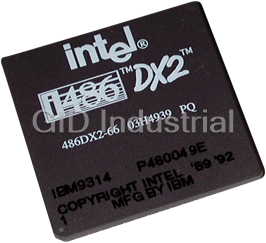
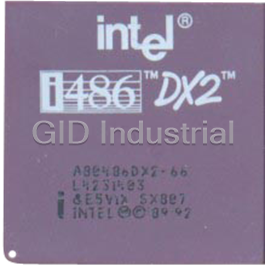
Intel A80486DX2-66 Processor - i486 DX2 CPU, 66MHz, 33MHz Bus Speed, 169-pin Grid Array (PGA)
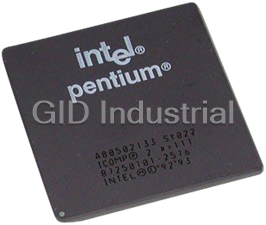
Intel A80502-133 Processor - Intel Pentium
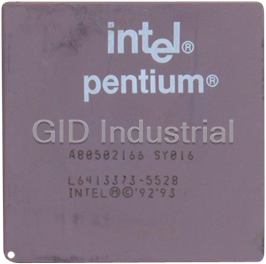
Intel A80502166 SY016 Processor - Pentium P54C CPU 166MHz Socket 5/7, 8+8KB L1 Cache

Intel BX80526F1000256 Processor - 1 GHz, 100 MHz, 256 KB, 370 pin, SL5QV, Intel Pentium 3 Processor
1.10 GHz, 100 MHz, 256 KB, 370 pin, SL5QW, Intel Pentium 3 Processor


Request a Quote

The quote request has been received

Close

Facing challenges or have inquiries? Feel free to contact us!
Call Us +1-469-283-2440
What they say about us
FANTASTIC RESOURCE
One of our top priorities is maintaining our business with precision, and we are constantly looking for affiliates that can help us achieve our goal. With the aid of GID Industrial, our obsolete product management has never been more efficient. They have been a great resource to our company, and have quickly become a go-to supplier on our list!
Bucher Emhart Glass
EXCELLENT SERVICE
With our strict fundamentals and high expectations, we were surprised when we came across GID Industrial and their competitive pricing. When we approached them with our issue, they were incredibly confident in being able to provide us with a seamless solution at the best price for us. GID Industrial quickly understood our needs and provided us with excellent service, as well as fully tested product to ensure what we received would be the right fit for our company.
Fuji
HARD TO FIND A BETTER PROVIDER
Our company provides services to aid in the manufacture of technological products, such as semiconductors and flat panel displays, and often searching for distributors of obsolete product we require can waste time and money. Finding GID Industrial proved to be a great asset to our company, with cost effective solutions and superior knowledge on all of their materials, it’d be hard to find a better provider of obsolete or hard to find products.
Applied Materials
CONSISTENTLY DELIVERS QUALITY SOLUTIONS
Over the years, the equipment used in our company becomes discontinued, but they’re still of great use to us and our customers. Once these products are no longer available through the manufacturer, finding a reliable, quick supplier is a necessity, and luckily for us, GID Industrial has provided the most trustworthy, quality solutions to our obsolete component needs.
Nidec Vamco
TERRIFIC RESOURCE
This company has been a terrific help to us (I work for Trican Well Service) in sourcing the Micron Ram Memory we needed for our Siemens computers. Great service! And great pricing! I know when the product is shipping and when it will arrive, all the way through the ordering process.
Trican Well Service
GO TO SOURCE
When I can't find an obsolete part, I first call GID and they'll come up with my parts every time. Great customer service and follow up as well. Scott emails me from time to time to touch base and see if we're having trouble finding something.....which is often with our 25 yr old equipment.
ConAgra Foods